
10-Year Treasury Yield Slides to 4.45% as Bond Market Signals Cooling
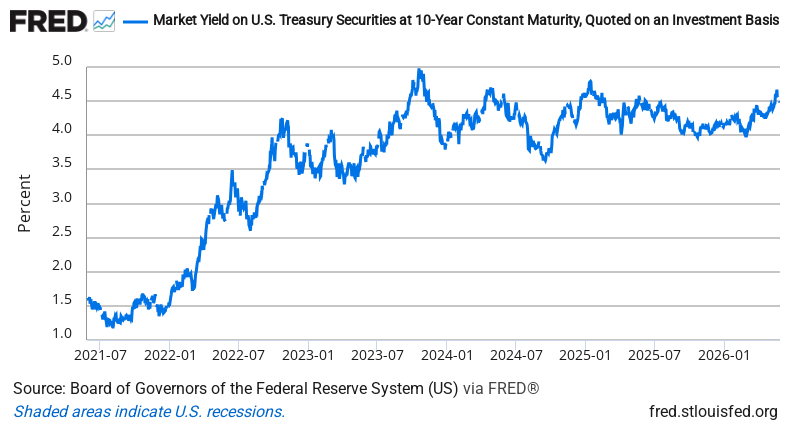
The 10-year Treasury yield dropped to 4.45% on Wednesday, marking a five-day slide from 4.57% to its lowest level in over a week. That’s a 0.12 percentage point decline in just five trading sessions — subtle moves by Treasury standards, but meaningful when you’re talking about the economy’s most important interest rate.
This gradual drift lower suggests bond investors are starting to price in a less aggressive economic outlook. When yields fall, it typically means one of two things: either inflation expectations are cooling or growth concerns are creeping in. Given recent mixed signals from employment data and consumer spending, the bond market appears to be hedging toward a more cautious view. The yield curve has been sending mixed messages all month, but this steady decline feels more deliberate than the daily noise we’ve seen.
For portfolio positioning, many professional investors view falling 10-year yields as a tailwind for both growth stocks and longer-duration bonds. Tech companies and other growth-oriented businesses become relatively more attractive when the risk-free rate declines, since their future cash flows get discounted at lower rates. Meanwhile, existing bondholders benefit as prices rise when yields fall — though the move has been gradual enough that most bond funds likely saw only modest gains.
The bigger question is whether this represents a temporary pause in the higher-rate environment or the early stages of a more significant shift. If economic data continues to soften, we could see yields drift even lower, which historically has been a mixed blessing — good for asset prices, but potentially signaling underlying economic weakness.
Bottom Line: The bond market is quietly pricing in a less aggressive economic outlook. Watch whether this becomes a trend or just a breather in what’s been a volatile year for rates.
Source: Federal Reserve Economic Data (FRED)
ON1010.com provides economic education for investors. Nothing here is investment advice. Always consult a qualified financial advisor before making investment decisions.
Free Research
The economy moves fast. We make sure you move faster.
Economic data, policy shifts, and market signals — delivered to your inbox.
Subscribe Free