
10-Year Yields Edge Higher as Markets Weigh Energy Inflation Against Growth
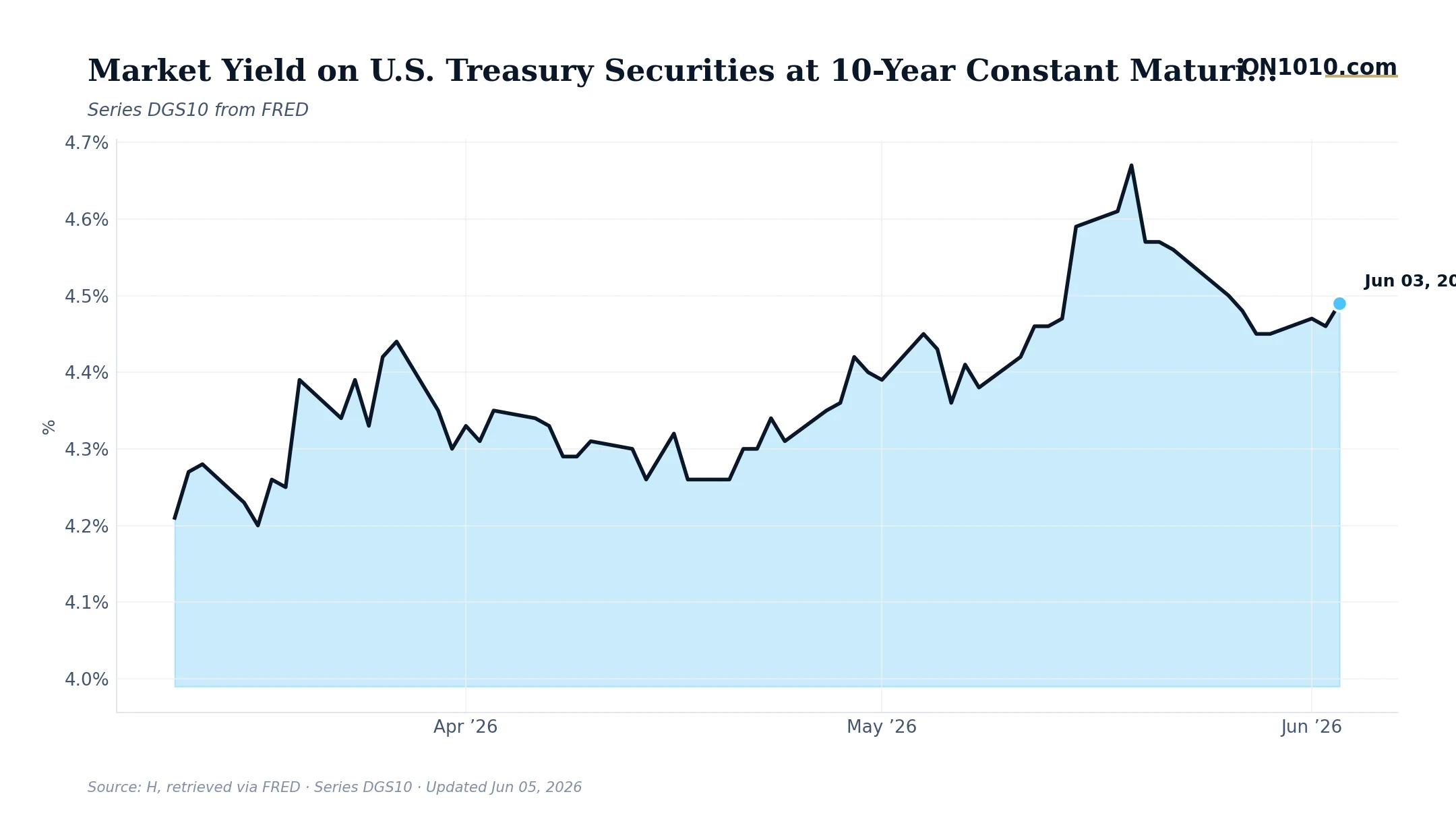
The 10-year Treasury yield ticked up to 4.49% yesterday, its highest close since late May, as bond investors continue wrestling with a tricky question: how much of the oil shock translates into persistent inflation versus economic drag.
The 3-basis-point move might seem small, but it reflects a bigger recalibration happening across fixed income. Since the Strait of Hormuz closed in late February, yields have been caught between two forces. Higher energy costs, with WTI crude still near $95 after spiking from $66, typically push inflation expectations higher, which hurts bonds. But energy shocks can also slow growth, which historically supports Treasury demand.
Right now, the inflation story is winning. The Fed has already paused its easing cycle, and monthly CPI prints could hit the 1-handle if oil stays elevated. That’s pushed the entire yield curve higher, with the 10-year adding roughly 40 basis points since the crisis began. Mortgage rates, corporate borrowing costs, and equity valuations all move with this benchmark, and they’re all feeling the pressure.
Historically, when Treasury yields rise this quickly during geopolitical energy shocks, it signals markets expect the inflation impact to outlast the growth drag. In past cycles, this type of move has prompted businesses to accelerate financing decisions before rates climb further, while equity investors have rotated toward sectors that benefit from higher rates and away from rate-sensitive growth names.
Bottom Line: Bond markets are betting the energy crisis creates more inflation persistence than economic weakness, a view that reshapes the cost of capital across the entire economy.
Source: Federal Reserve Economic Data (FRED)
ON1010 Research is an independent publisher of economic education and is not a registered investment adviser, broker-dealer, or investment company. This content is for educational and informational purposes only and is not investment advice or a recommendation to buy, sell, or hold any security. Published under the publisher exemption recognized by Section 202(a)(11)(D) of the Investment Advisers Act of 1940 (Lowe v. SEC). Always consult a qualified financial professional before making any financial decision.
Free Research
The economy moves fast. We make sure you move faster.
Economic data, policy shifts, and market signals — delivered to your inbox.
Subscribe Free