
2-Year Treasury Hits Lowest Level in Nearly a Week as Rate Cut Bets Build
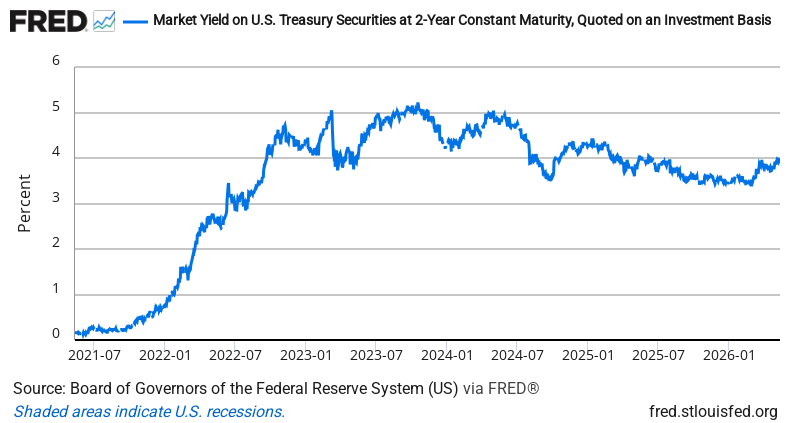
The 2-year Treasury yield dropped to 3.98% Tuesday, down from 4.0% the day before — its lowest close since May 6th. That might seem like a tiny move, but in the bond world, even small shifts in the 2-year carry big messages about where traders think Fed policy is headed.
Here’s what makes this interesting: the 2-year is essentially a bet on Fed policy over the next 24 months. When it falls, it usually means traders are pricing in either rate cuts or a less aggressive Fed stance. The recent drift lower — from 3.92% last Wednesday to today’s close — suggests the market is building conviction that the central bank’s next move will be down, not up. This lines up with recent economic data showing cooling inflation and a softer labor market, giving the Fed room to ease without stoking price pressures.
The timing matters too. We’re seeing this yield decline even as the economy continues growing, which historically has been a sweet spot for both stocks and bonds. When rates fall because the Fed has successfully engineered a “soft landing” rather than because of economic distress, it tends to be bullish for risk assets. The question is whether this dovish pivot proves premature if inflation proves stickier than expected.
Many professional investors use 2-year yield movements as a guide for positioning across asset classes. Historically, when the 2-year trends lower on soft-landing expectations, investors have rotated toward longer-duration bonds and growth stocks that benefit from lower discount rates. Real estate investment trusts and utilities also tend to attract attention in this environment.
Bottom Line: The bond market is betting the Fed’s next move is a cut, not a hike. If that bet proves right, we could be entering a goldilocks period for risk assets.
Source: Federal Reserve Economic Data (FRED)
ON1010.com provides economic education for investors. Nothing here is investment advice. Always consult a qualified financial advisor before making investment decisions.
Free Research
The economy moves fast. We make sure you move faster.
Economic data, policy shifts, and market signals — delivered to your inbox.
Subscribe Free