
2-Year Treasury Yield Bounces Back as Bond Market Searches for Direction
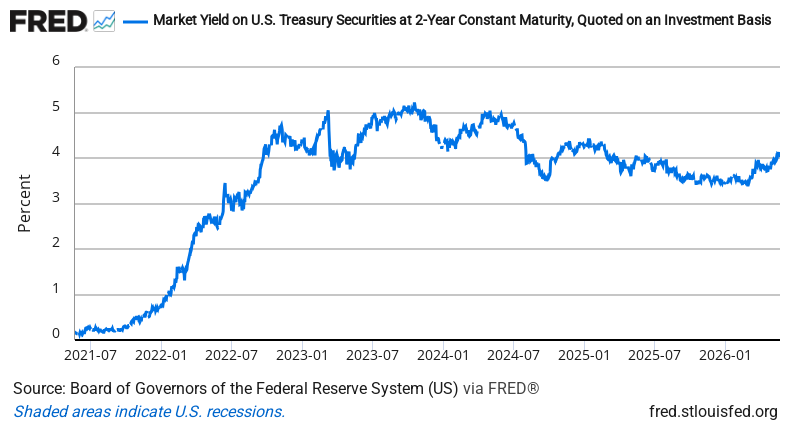
The 2-year Treasury yield jumped to 4.08% yesterday, up from 4.04% the day before — continuing a choppy pattern that’s seen rates ping-pong between 4.00% and 4.13% over the past week.
This isn’t random noise. The 2-year yield is essentially the market’s best guess at where Fed rates will be in the near future, and right now, that guess keeps changing. When yields move this erratically in such a tight range, it usually means bond traders are getting conflicting signals about what the Fed will do next. They’re not convinced rates are heading definitively higher or lower — they’re just not sure.
The bigger story here is what this uncertainty reveals about where we are economically. When the 2-year yield was steadily climbing or falling, markets had conviction about the Fed’s path. This sideways churn suggests we might be at an inflection point. Either the economy is strong enough that the Fed stays put, or cracks are forming that eventually force their hand. Bond markets hate uncertainty, and that’s exactly what we’re seeing priced in right now.
Historically, when 2-year yields trade sideways like this, many professional investors focus on assets that can benefit regardless of which way rates break. That might mean dividend-paying stocks that can hold up if rates stay elevated, or keeping some powder dry for opportunities if yields eventually head lower. The key is positioning for multiple scenarios rather than making a big directional bet.
Bottom Line: The bond market is telling us it doesn’t know what comes next — and when the “smart money” is confused, that’s usually when the most interesting opportunities start to emerge.
Source: Federal Reserve Economic Data (FRED)
ON1010.com provides economic education for investors. Nothing here is investment advice. Always consult a qualified financial advisor before making investment decisions.
Free Research
The economy moves fast. We make sure you move faster.
Economic data, policy shifts, and market signals — delivered to your inbox.
Subscribe Free