
2-Year Treasury Yield Creeps Higher as Bond Market Sends Mixed Signals
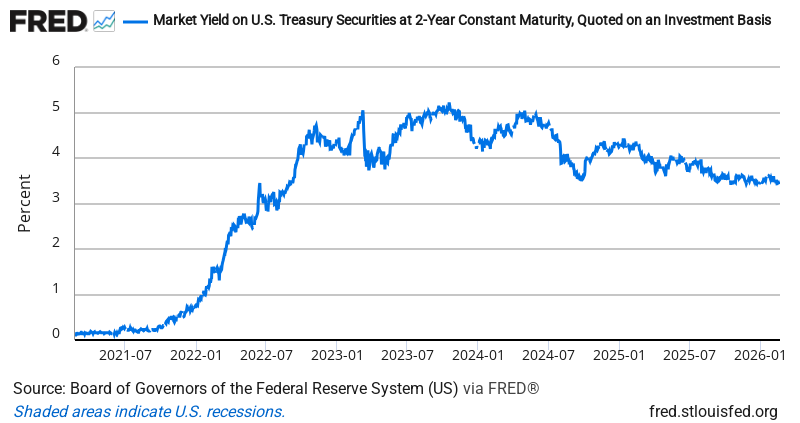
The 2-year Treasury yield ticked up to 3.48% Thursday, continuing a choppy dance that’s kept bond traders guessing about the Fed’s next moves. While the one basis point bump seems minor, it caps off a week of small but persistent increases that suggest the market is quietly pricing in a less dovish Fed than many expected.
This isn’t dramatic movement, but it’s telling. The 2-year yield — which closely tracks Fed expectations — has been bouncing between 3.40% and 3.48% over the past week, signaling uncertainty rather than conviction. Historically, when the 2-year yield grinds higher in small increments like this, it often means bond investors are getting nervous about inflation staying stickier than the Fed wants. With corporate profit margins still historically fat and companies maintaining pricing power, that concern makes sense. The productivity boom from AI investment is deflationary in theory, but we’re not seeing it show up in consumer prices yet.
Many professional investors view this type of yield environment as a “wait and see” moment for fixed income. When the 2-year is drifting higher without dramatic moves, it typically signals that bond allocations should focus on shorter durations while keeping powder dry for clearer directional signals. Historically, periods of yield uncertainty like this have led investors to favor Treasury bills over longer-term bonds until the Fed’s path becomes clearer.
Bottom Line: The bond market is pricing in just enough Fed hawkishness to keep yields creeping higher, but not enough to signal panic. Watch whether this drift continues or stalls out — that’ll tell us if the market really believes inflation is under control.
Source: Federal Reserve Economic Data (FRED)
ON1010.com provides economic education for investors. Nothing here is investment advice. Always consult a qualified financial advisor before making investment decisions.
Free Research
The economy moves fast. We make sure you move faster.
Economic data, policy shifts, and market signals — delivered to your inbox.
Subscribe Free