
2-Year Yields Drift Lower as Markets Price Out Fed Hawkishness
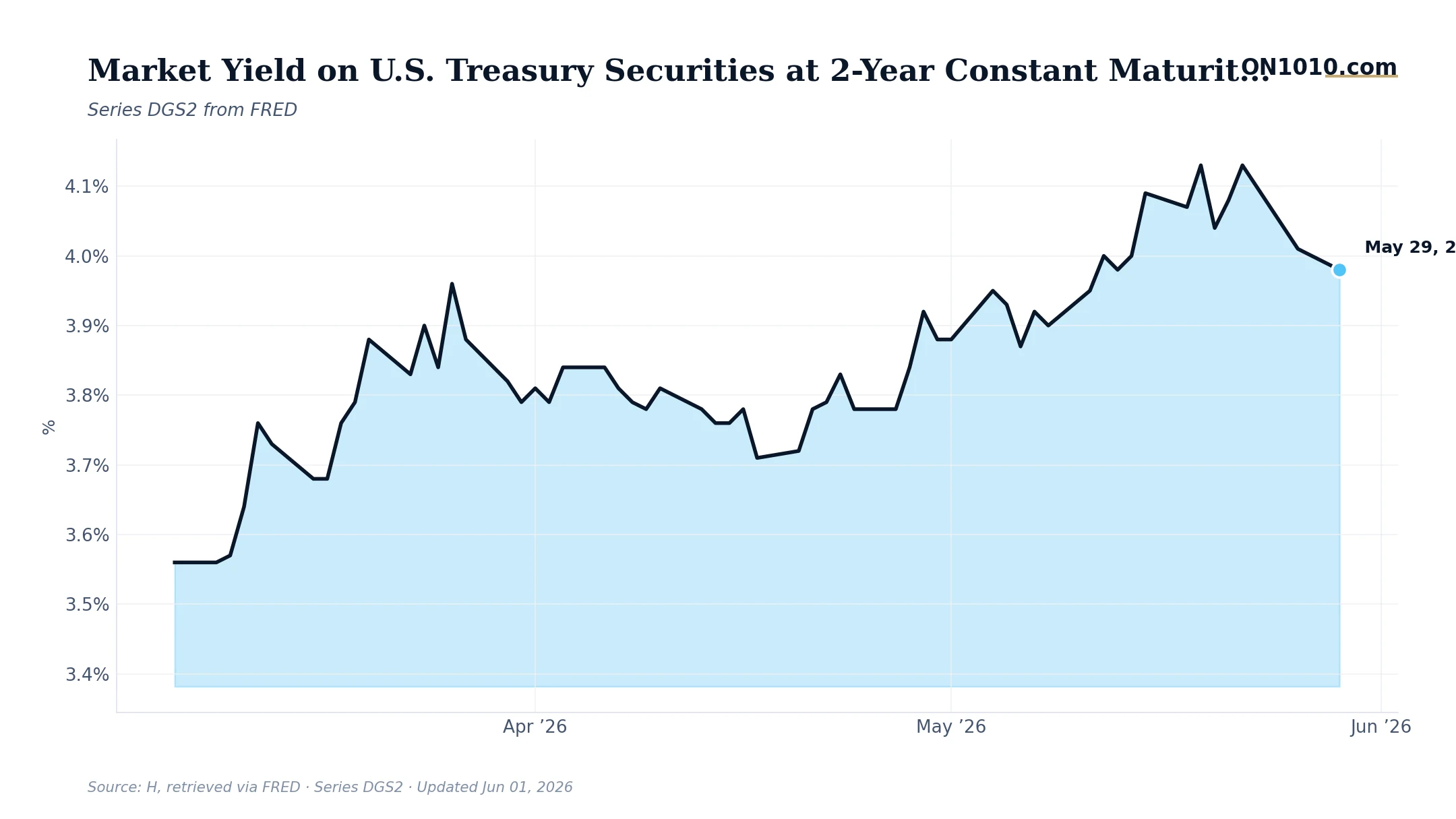
The 2-year Treasury yield slipped to 3.98% yesterday, down from 4.13% just a week ago. That 15 basis point drop in five trading days suggests bond traders are growing more confident the Fed won’t need to get aggressive on rates despite the energy-driven inflation spike.
Here’s the interesting part: this move lower comes even as oil trades near $95, a 44% premium from pre-crisis levels. Normally, when energy prices surge like this, short-term rates follow higher as markets price in Fed tightening. Instead, the 2-year is drifting down, which tells us traders think this oil shock is more likely to slow growth than force the Fed’s hand. That makes sense when you remember the US is a net energy exporter. Higher oil prices benefit American producers even as they squeeze consumers elsewhere.
The pattern reminds me of 2022, when yields initially spiked on inflation fears but then retreated as recession risks grew. The difference now is the inflation source: geopolitical energy disruption rather than broad-based demand pressure. Markets seem to be betting this creates more of an economic headwind than a monetary policy challenge.
Many professional investors use the 2-year yield as their primary Fed radar. When it’s falling despite inflationary pressures, it often signals expectations for policy accommodation down the road, not immediate tightening. In this environment, that could favor longer-duration bonds and growth stocks that benefit from stable rate expectations.
Bottom Line: Bond markets are looking through the energy shock and pricing in economic moderation rather than Fed aggression. If they’re right, this could mark the end of higher-for-longer fears.
Source: Federal Reserve Economic Data (FRED)
ON1010.com provides economic education for investors. Nothing here is investment advice. Always consult a qualified financial advisor before making investment decisions.
Free Research
The economy moves fast. We make sure you move faster.
Economic data, policy shifts, and market signals — delivered to your inbox.
Subscribe Free