
The 10-Year Treasury Just Hit Its Highest Level in a Week — But the Real Story Is What’s Not Happening
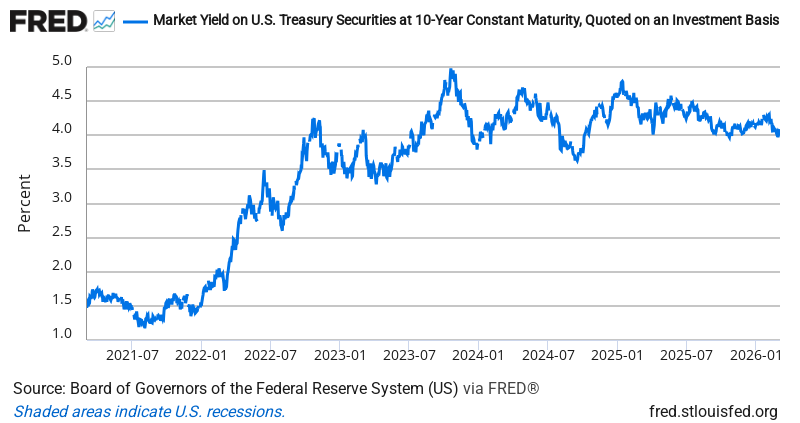
The 10-year Treasury yield climbed to 4.09% Wednesday, up from 4.06% the day before and marking its highest close since late February. That’s a 0.03 percentage point jump in a single session — small in isolation, but part of a pattern that’s quietly reshaping how investors think about the next six months.
Here’s what’s interesting: yields are creeping higher even without major economic surprises or Fed drama. No inflation shock, no employment bombshell, no emergency policy meetings. Just a steady drift upward that suggests bond investors are repricing their expectations for where rates settle once the current cycle plays out. When yields rise without obvious catalysts, it often signals a deeper shift in how markets view the economy’s underlying strength.
This puts us in a curious spot. Rising yields typically reflect either inflation fears or economic optimism — but current moves seem driven more by recalibration than reaction. Corporate borrowing costs are edging higher, which historically leads to more selective capital allocation. Companies start favoring higher-return projects and deferring marginal investments. For stocks, higher yields create stiffer competition for investor dollars, especially pressuring growth companies whose future cash flows get discounted more heavily.
Many professional investors use rising rate environments to reassess portfolio duration risk — both in bonds and growth stocks. Historically, this type of gradual yield climb has led investors to favor value over growth, shorter-duration bonds over longer ones, and sectors that benefit from higher rates like financials. The key is watching whether corporate profit margins can absorb higher borrowing costs without cutting back on expansion plans.
Bottom Line: When Treasury yields rise quietly, it’s often more significant than when they spike dramatically — markets are telling us something about the economy’s baseline strength, not just reacting to headlines.
Source: Federal Reserve Economic Data (FRED)
ON1010.com provides economic education for investors. Nothing here is investment advice. Always consult a qualified financial advisor before making investment decisions.
Free Research
The economy moves fast. We make sure you move faster.
Economic data, policy shifts, and market signals — delivered to your inbox.
Subscribe Free