
Jobs Market Hits the Brakes — But Is This Signal or Noise?
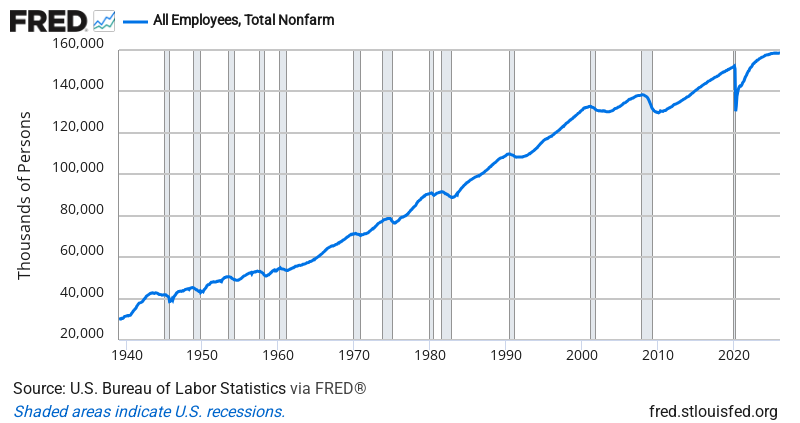
The U.S. economy shed 92,000 jobs in February, the first monthly decline since late 2025 and a sharp reversal from January’s modest gain of 126,000. What makes this particularly interesting: we’re seeing job losses even as most other economic indicators suggest steady, if unspectacular, growth.
This isn’t your typical recession-style job destruction. The year-over-year change is essentially flat at -0.01% — meaning the economy has roughly the same number of jobs as it did a year ago. That’s stagnation, not collapse. The recent monthly volatility (jobs fell in February, rose in January, fell slightly in December) suggests we may be entering a phase where the labor market is simply treading water rather than powering ahead. Historically, when job growth stalls around full employment, it often signals that businesses are becoming more cautious about expansion — a leading indicator that profit margins may be under pressure.
Many professional investors view this type of labor market pause as a potential inflection point. When job growth slows from a position of strength rather than weakness, it can create opportunities in sectors that benefit from stable employment and lower wage pressures. Fixed-income investors often find this environment attractive, as slower job growth reduces the Fed’s urgency to raise rates. Equity investors typically start looking more closely at companies with strong pricing power and stable cash flows rather than those dependent on rapid hiring and expansion.
Bottom Line: A job market that’s neither booming nor busting forces investors to think differently — this could be the new normal of steady-state employment where stock pickers matter more than beta.
Source: Federal Reserve Economic Data (FRED)
ON1010.com provides economic education for investors. Nothing here is investment advice. Always consult a qualified financial advisor before making investment decisions.
Free Research
The economy moves fast. We make sure you move faster.
Economic data, policy shifts, and market signals — delivered to your inbox.
Subscribe Free