
Unemployment Ticks Higher as Labor Market Shows Signs of Cooling
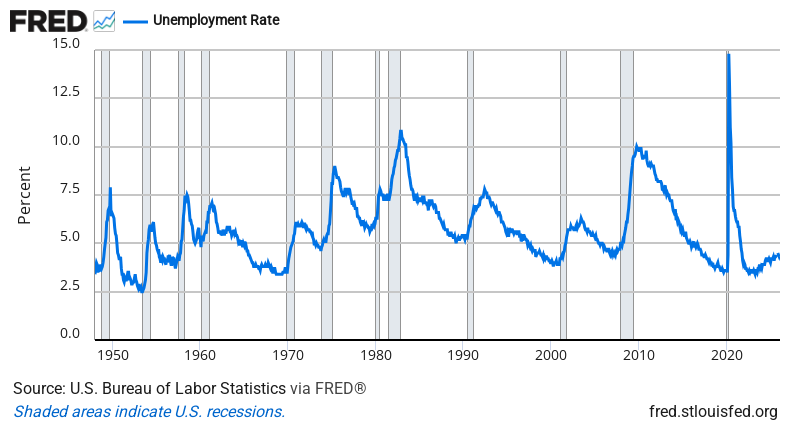
The unemployment rate edged up to 4.4% in February from 4.3% in January — a small move that continues a subtle but notable shift in the jobs market.
What’s interesting here isn’t the 0.1 percentage point bump itself, but the pattern emerging over the past six months. We’re seeing unemployment settle into a higher trading range, bouncing between 4.3% and 4.5% compared to the sub-4% readings we got used to in 2023. That’s still historically low unemployment, but the direction matters more than the level.
This gradual uptick fits with other signals suggesting the labor market is cooling from red-hot to merely warm. When unemployment starts drifting higher — even gradually — it often precedes slower hiring and wage growth. Companies typically pull back on job postings before they start layoffs, and we may be seeing that dynamic play out now. The question is whether this cooling stabilizes around current levels or continues building momentum.
From an investment perspective, many professional traders view a softening jobs market as a double-edged sword. On one hand, it gives the Federal Reserve more room to cut interest rates, which historically benefits growth stocks and longer-duration bonds. On the other hand, rising unemployment can signal weakening consumer spending power down the road. In this type of environment, investors often start paying closer attention to companies with strong balance sheets and predictable cash flows rather than those dependent on continued economic acceleration.
Bottom Line: The labor market is shifting gears from sprint to jog — not collapsing, but definitely decelerating. The real test is whether this cooling helps inflation without tipping into something more serious.
Source: Federal Reserve Economic Data (FRED)
ON1010.com provides economic education for investors. Nothing here is investment advice. Always consult a qualified financial advisor before making investment decisions.
Free Research
The economy moves fast. We make sure you move faster.
Economic data, policy shifts, and market signals — delivered to your inbox.
Subscribe Free