
Wage Growth Hits Sweet Spot as Inflation Fears Cool
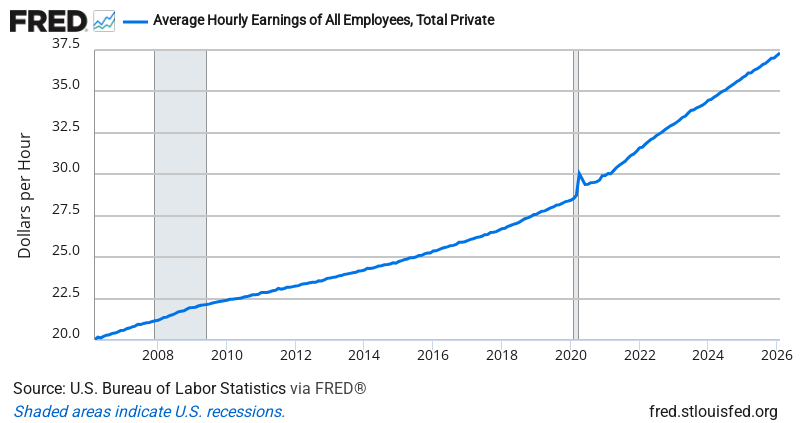
Workers pocketed another 0.4% hourly wage increase in February, pushing average earnings to $37.32 — but here’s the interesting part: that 3.3% annual pace is right in the zone where everyone wins.
This is wage growth without the sting. At 3.3% annually, workers are gaining real purchasing power (assuming inflation stays near the Fed’s 2% target), but companies aren’t getting squeezed into a wage-price spiral. It’s fast enough to matter in your paycheck, but measured enough that businesses can absorb the costs without panicking about profit margins. The steady $0.15 monthly gains over the past few months suggest this isn’t a fluke — it’s a trend.
The bigger story here is what’s not happening. We’re not seeing the explosive wage growth of 2021-2022 that helped fuel inflation fears. But we’re also not seeing the wage stagnation that would signal economic weakness. This Goldilocks scenario — where productivity gains allow companies to pay workers more without sacrificing profitability — is exactly what the Fed wants to see as they navigate the final stretch of their inflation fight.
What This Means For Your Portfolio: Historically, this type of balanced wage growth has been friendly to both stocks and bonds. Many professional investors view stable, moderate wage increases as a sign of economic health without inflationary pressure — the kind of environment where corporate earnings can grow alongside consumer spending power. It’s the type of data that lets the Fed stay patient rather than reactive.
Bottom Line: When wage growth runs hot, inflation worries spike and markets get nervous. When it runs cold, recession fears creep in. At 3.3%, we’re in the sweet spot — and that’s worth more than any individual month’s number.
Source: Federal Reserve Economic Data (FRED)
ON1010.com provides economic education for investors. Nothing here is investment advice. Always consult a qualified financial advisor before making investment decisions.
Free Research
The economy moves fast. We make sure you move faster.
Economic data, policy shifts, and market signals — delivered to your inbox.
Subscribe Free