
The Yield Curve Is Starting to Worry Again
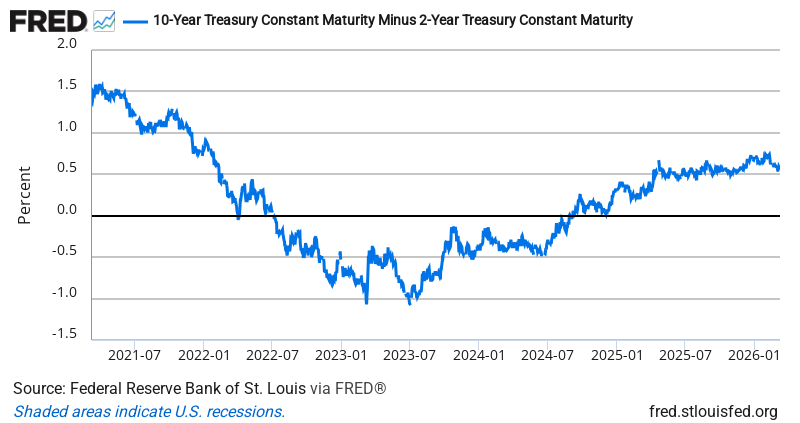
The 10-year minus 2-year Treasury spread tightened to 0.56% on Friday, down from 0.59% earlier in the week. That’s a 5% decline in just three trading days — and the curve is now at its flattest level since early February.
Here’s what makes this interesting: we’re not talking about inversion territory yet, but the flattening is happening fast. The spread has compressed from around 0.58% to 0.56% in less than a week, which suggests bond traders are getting nervous about something. When the curve flattens this quickly, it usually means investors are bidding up long-term bonds (pushing yields down) while short-term rates stay elevated.
The mechanism matters here. A flattening curve typically signals that investors expect slower growth ahead, which would eventually force the Fed to cut rates. That’s why they’re willing to lock in today’s higher long-term yields — they think those yields won’t be available much longer. It’s a bet that whatever strength we’re seeing now won’t last.
This fits with other warning signs flashing in markets right now. Defensive sectors like utilities and real estate have been crushing offensive plays like financials over the past month. The VIX has spiked above 30. Money is flowing toward safety, not growth. The yield curve is just another piece of that puzzle.
History suggests paying attention when the curve flattens this fast. The last time we saw sustained rapid compression was in early 2022, right before the Fed’s aggressive hiking cycle really took hold. We’re not there yet — 0.56% is still solidly positive territory. But the direction and speed of change matter as much as the level.
Bottom Line: The yield curve isn’t screaming recession yet, but it’s starting to whisper warnings that growth expectations are cooling faster than most people realize.
Source: Federal Reserve Economic Data (FRED)
ON1010.com provides economic education for investors. Nothing here is investment advice. Always consult a qualified financial advisor before making investment decisions.
Free Research
The economy moves fast. We make sure you move faster.
Economic data, policy shifts, and market signals — delivered to your inbox.
Subscribe Free