
Core Inflation Holds Right at Target — But the Details Matter More Than the Headline
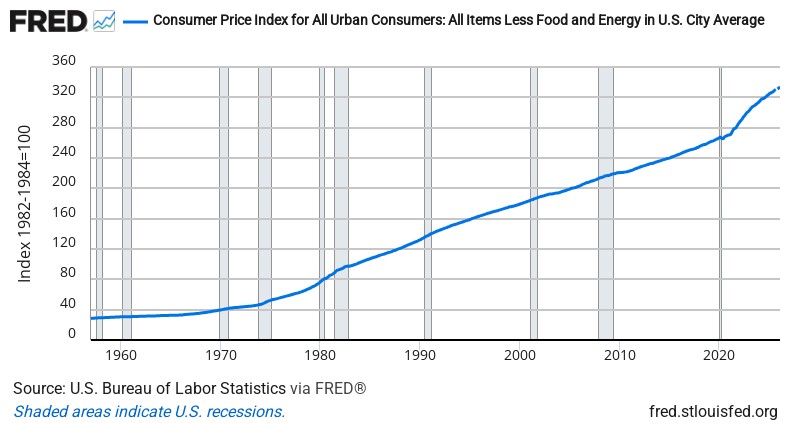
Core CPI rose 0.22% in February and 2.16% year-over-year, landing almost exactly on the Fed’s 2% target. On the surface, this looks like the textbook soft landing everyone hoped for. But the more interesting story is hiding in the trend.
Look at the monthly progression: 0.19% in November, 0.23% in December, 0.30% in January, and now 0.22% in February. That January spike wasn’t a fluke — it was real acceleration that has only partially cooled. We’re running at roughly 2.8% annualized over the past three months, meaningfully above the Fed’s comfort zone.
This matters because core inflation is supposed to be the stable one. Food and energy bounce around, but core reflects the deeper structural forces in the economy — wages, rents, and services that don’t reverse quickly. When core starts moving, it tends to keep moving in the same direction.
The timing creates an interesting puzzle for the Fed. With corporate profit margins at historic highs and still expanding, companies have pricing power they haven’t enjoyed in years. The AI-driven productivity gains everyone talks about should be disinflationary, but they’re being offset by something else — likely the combination of reshoring costs, tariff adjustments, and wage pressures in tight labor markets.
Historically, when core inflation runs above 2.5% for multiple months, the Fed gets nervous about letting expectations drift higher. But they also know the economy is fundamentally healthy right now, with no recession in sight and private sector growth holding up despite government spending cuts.
Professional investors are watching this closely because it changes the Fed’s calculus. A 2.16% reading gives them cover to stay patient, but the underlying momentum suggests they can’t afford to get complacent.
Bottom Line: The headline number looks perfect, but the trend underneath is starting to lean inflationary — and that changes everything about how long the Fed can stay on the sidelines.
Source: Federal Reserve Economic Data (FRED)
ON1010.com provides economic education for investors. Nothing here is investment advice. Always consult a qualified financial advisor before making investment decisions.
Free Research
The economy moves fast. We make sure you move faster.
Economic data, policy shifts, and market signals — delivered to your inbox.
Subscribe Free