
The 10-Year Treasury Just Hit a Wall at 4.2% — Here’s Why That Matters
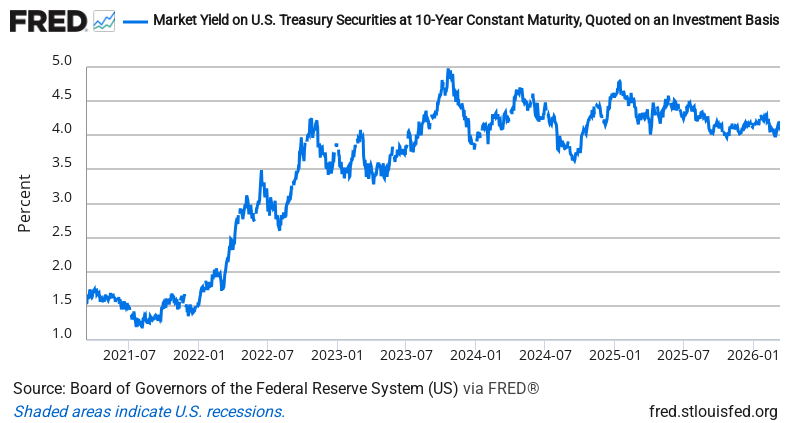
The 10-year Treasury yield jumped to 4.21% yesterday, marking its highest close since early March and capping a steady climb from 4.09% just a week ago. But here’s the interesting part: 4.2% has become something of a ceiling this year — every time yields approach this level, they seem to stall out.
This isn’t random. Bond markets are wrestling with two competing forces right now. On one side, you have solid economic data suggesting the Fed might hold rates higher for longer. On the other, you have investors still betting that slower growth will eventually force cuts. The result? Yields keep bumping up against 4.2% like a stock testing resistance. When borrowing costs hit this level, mortgage applications typically drop, corporate bond issuance slows, and companies start postponing expansion plans. It’s the economy’s natural speed bump.
The pattern matters because 4.2% represents roughly where 30-year mortgage rates hit 7% — historically a major psychological barrier for homebuyers. We’re also seeing corporate profit margins compress as borrowing costs rise, which typically leads to more cautious business investment. If yields break definitively above this level, it signals bond investors think something fundamental has changed about either growth prospects or inflation expectations.
Many professional investors treat the 4.2% level as a key decision point. Historically, when the 10-year yield sustains moves above previous resistance levels, it often signals a broader shift in market expectations. Portfolio managers tend to reassess duration risk in their bond holdings and look more closely at sectors that benefit from higher rates, like financials.
Bottom Line: The 10-year yield isn’t just testing a number — it’s testing whether the economy can handle meaningfully higher borrowing costs without slowing down.
Source: Federal Reserve Economic Data (FRED)
ON1010.com provides economic education for investors. Nothing here is investment advice. Always consult a qualified financial advisor before making investment decisions.
Free Research
The economy moves fast. We make sure you move faster.
Economic data, policy shifts, and market signals — delivered to your inbox.
Subscribe Free