
Bond Markets Signal Fed Pivot May Be Closer Than Expected
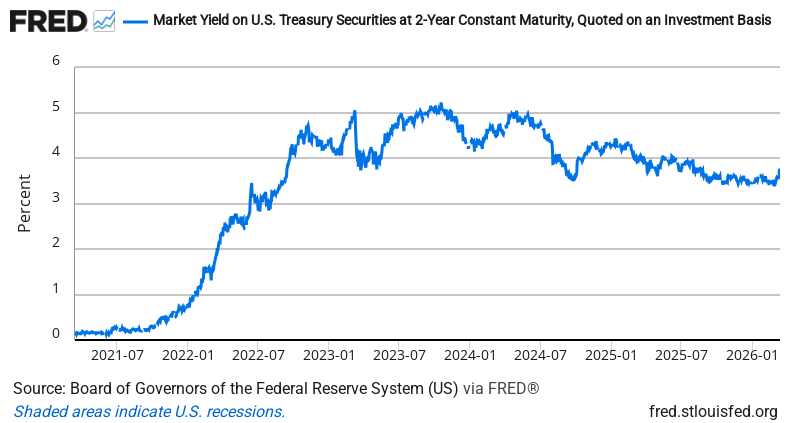
The 2-year Treasury yield dropped to 3.73% yesterday, down from 3.76% the day before — a small move that caps off a week of notable volatility. More telling: yields have jumped 17 basis points since March 6th, suggesting bond traders are recalibrating their Fed expectations in real time.
Here’s the puzzle: 2-year yields are the market’s best guess at where Fed policy is heading over the next 18-24 months. When they spike like this — even briefly — it usually means traders think the Fed will keep rates higher for longer than previously expected. But the quick reversal suggests that conviction isn’t rock solid. We’re seeing a tug-of-war between data that’s been hotter than expected and a Fed that’s been signaling patience.
This matters because the 2-year is where policy uncertainty shows up first. Unlike the 10-year, which reflects long-term growth and inflation expectations, the 2-year is pure Fed-watching. When it’s this jumpy, it tells us the market doesn’t have a clear read on what Powell & Co. will do next. That uncertainty tends to ripple through everything from mortgage rates to corporate borrowing costs.
For investors, this type of rate volatility historically creates both challenges and opportunities. Many professional money managers use periods like this to reassess duration risk in bond portfolios — shorter-term bonds become more attractive when rate direction is unclear. Equity investors often focus on sectors that benefit from stable or falling rates, like REITs and utilities, while being cautious about rate-sensitive growth stocks.
Bottom Line: When the bond market can’t decide where rates are going, it usually means we’re at an inflection point. The question isn’t whether the Fed will cut rates — it’s when they’ll feel confident enough to start.
Source: Federal Reserve Economic Data (FRED)
ON1010.com provides economic education for investors. Nothing here is investment advice. Always consult a qualified financial advisor before making investment decisions.
Free Research
The economy moves fast. We make sure you move faster.
Economic data, policy shifts, and market signals — delivered to your inbox.
Subscribe Free