
The 10-Year Treasury Just Cracked a Key Level — But Quietly
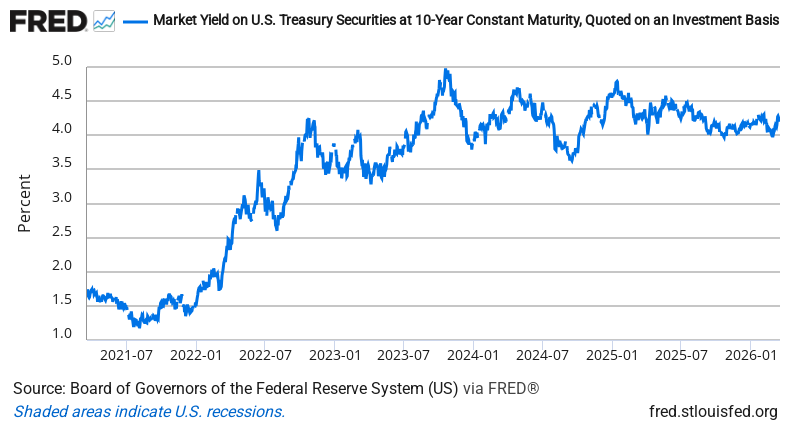
The 10-year Treasury yield slipped to 4.25% yesterday, down from 4.26% the day before. That’s barely a whisker of movement, but it’s part of a week-long drift that has bond traders quietly taking notice.
Here’s why this matters: We’re seeing the 10-year consistently trade below 4.30% for the first time in weeks, even as economic data continues to show surprising strength. That’s not normal. When the economy is humming, bond yields typically rise as investors demand higher returns to compensate for growth and potential inflation. The fact that yields are edging lower suggests bond investors are either betting on a Fed pivot or pricing in risks that aren’t showing up in the headlines yet.
This creates an interesting puzzle for portfolio allocation. Historically, when Treasury yields hover in this range while growth indicators remain solid, many professional investors start looking for cracks in the foundation. Are corporate profit margins beginning to compress? Is something brewing in credit markets that hasn’t hit the mainstream data yet? The bond market often sniffs out problems before they show up in employment or GDP numbers.
In this type of environment, many institutional traders tend to reduce duration risk while keeping a close eye on credit spreads. The Treasury market might be telling us that the “higher for longer” interest rate story is starting to shift — or it could just be temporary technical trading.
Bottom Line: When bond yields drift lower despite strong economic data, smart money starts asking what the bond market knows that the rest of us don’t.
Source: Federal Reserve Economic Data (FRED)
ON1010.com provides economic education for investors. Nothing here is investment advice. Always consult a qualified financial advisor before making investment decisions.
Free Research
The economy moves fast. We make sure you move faster.
Economic data, policy shifts, and market signals — delivered to your inbox.
Subscribe Free