
Bond Market Shows Rising Fed Anxiety as 2-Year Yields Jump
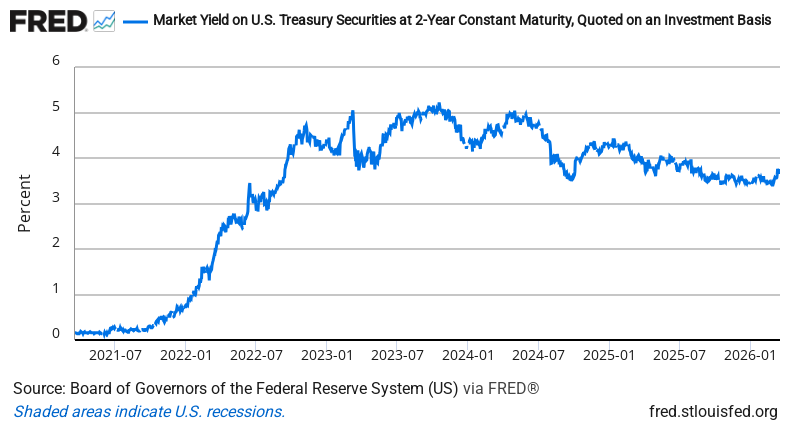
The 2-year Treasury yield spiked to 3.79% yesterday, marking its highest level in nearly a week and extending a volatile stretch that has traders second-guessing what the Fed will do next. The 3 basis point jump might seem small, but it caps off a 11 basis point surge since March 16th — significant movement for a bond that typically reflects near-term Fed expectations.
Here’s what’s fascinating: this isn’t your typical smooth glide path. The 2-year has been whipsawing between 3.68% and 3.79% over just four trading days, suggesting the market is genuinely unsure about the Fed’s next moves. When bond traders can’t agree on near-term policy, it usually means incoming data is sending mixed signals about inflation, growth, or both. This kind of volatility often precedes either a major policy shift or a significant economic data release that forces clarity.
The bigger picture? Rising 2-year yields typically signal that investors expect either higher Fed rates ahead or that current rates will stay elevated longer than previously thought. Either scenario suggests the economy might be running hotter than policymakers are comfortable with — which historically has meant profit margins come under pressure as borrowing costs rise and consumer spending shifts.
In this type of environment, many professional investors tend to favor shorter-duration assets and companies with strong pricing power. When the Fed’s path becomes unclear, quality becomes king — businesses that can maintain margins even as their financing costs climb tend to outperform. Historically, this kind of rate uncertainty has led investors to look more closely at cash-generative companies and away from growth stocks that depend on cheap money.
Bottom Line: When the 2-year Treasury can’t sit still, it’s telling you the bond market doesn’t know what’s coming next — and that uncertainty tends to spread to everything else.
Source: Federal Reserve Economic Data (FRED)
ON1010.com provides economic education for investors. Nothing here is investment advice. Always consult a qualified financial advisor before making investment decisions.
Free Research
The economy moves fast. We make sure you move faster.
Economic data, policy shifts, and market signals — delivered to your inbox.
Subscribe Free