
Yield Curve Holding Steady While Markets Brace for Energy Shock
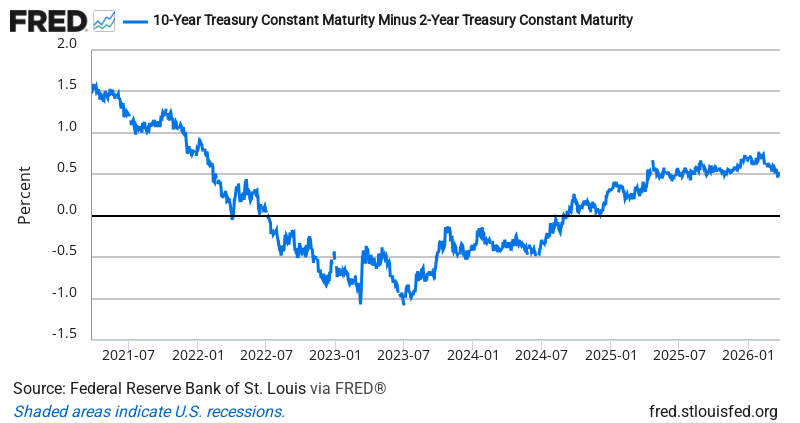
The 10-year minus 2-year Treasury spread held at 0.49% for the second straight day, a picture of calm that masks the turmoil brewing beneath the surface. While bond traders keep the curve stable, the broader market is pricing in serious uncertainty — the VIX sits at 26, well above its 20-day average, as investors grapple with the ongoing Strait of Hormuz closure and $95 oil.
This stability in the yield curve is actually the story here. Normally, when oil spikes 44% in a month and geopolitical crises unfold, you’d expect the curve to steepen dramatically as inflation expectations surge. Instead, we’re seeing a managed response — the Fed has already signaled that rate cuts are off the table, and bond markets seem to believe they mean it. The curve is telling us that while inflation risks are real, recession fears haven’t taken hold. That’s consistent with the US being a net energy exporter: higher oil prices hurt consumers but help domestic producers.
Historically, when the yield curve maintains this kind of equilibrium during external shocks, it suggests markets expect the Fed to thread the needle — managing inflation without crushing growth. Many professional investors in this environment tend to focus on sectors that can pass through higher costs (financials, energy) while avoiding margin-squeezed plays. The risk-on rotation into tech and financials over the past month reflects this positioning.
Bottom Line: A steady yield curve amid an energy crisis signals markets expect inflation management, not economic collapse. The real test comes if oil pushes past $100 — that’s when the curve’s calm could crack.
Source: Federal Reserve Economic Data (FRED)
ON1010.com provides economic education for investors. Nothing here is investment advice. Always consult a qualified financial advisor before making investment decisions.
Free Research
The economy moves fast. We make sure you move faster.
Economic data, policy shifts, and market signals — delivered to your inbox.
Subscribe Free