
Jobless Claims Edge Higher as Energy Crisis Complicates Fed’s Next Move
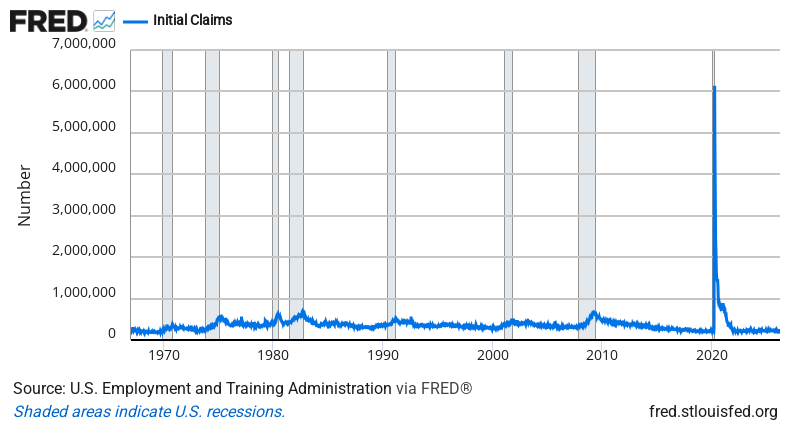
Initial jobless claims ticked up to 210,000 last week from 205,000 the week prior — a modest 5,000 increase that might normally fly under the radar. But with oil trading near $95 following the Strait of Hormuz closure, even small labor market shifts carry outsized weight for a Federal Reserve already spooked by energy-driven inflation fears.
The claims figure sits comfortably in the low-200,000s range that’s defined the post-pandemic labor market — still signaling underlying job market strength. But the recent pattern tells a more complex story. Claims have bounced between 205,000 and 214,000 over the past six weeks, suggesting some churn beneath the surface as energy-intensive sectors begin adjusting to persistently higher input costs. With WTI crude up 44% from pre-crisis levels around $66, companies across transportation, manufacturing, and logistics are facing margin pressure that historically leads to workforce optimization before outright layoffs.
The timing matters for Fed policy. Before the Hormuz crisis, officials were positioned to cut rates as inflation settled around 2.5%. Now, with every sustained $10 oil premium adding roughly 0.6% to CPI, the Fed has paused easing indefinitely. Many professional investors are watching claims data more closely than usual — not for recession signals, but as a gauge of how quickly energy shock transmission moves through the labor market. Historically, energy-driven inflation episodes create a tricky environment where modest employment cooling can actually support asset prices by reducing Fed hawkishness without threatening growth.
Bottom Line: The labor market remains resilient, but energy-driven margin pressure is starting to show up in hiring patterns. In this environment, bad news on jobs might paradoxically be good news for markets if it keeps the Fed from turning more hawkish on inflation.
Source: Federal Reserve Economic Data (FRED)
ON1010.com provides economic education for investors. Nothing here is investment advice. Always consult a qualified financial advisor before making investment decisions.
Free Research
The economy moves fast. We make sure you move faster.
Economic data, policy shifts, and market signals — delivered to your inbox.
Subscribe Free