
Fed Funds Rate Stays Glued at 3.64% — But That’s the Story
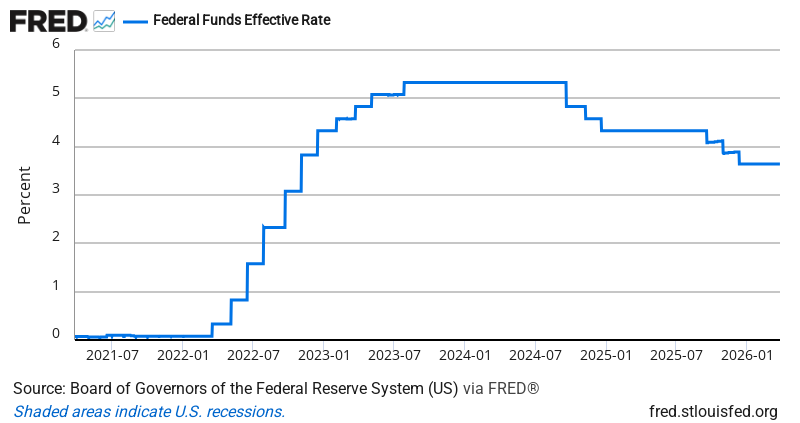
The effective federal funds rate held steady at 3.64% on Wednesday, marking six straight days of no movement. But here’s what’s interesting: this isn’t normal Fed stability — it’s markets pricing in a central bank that’s officially stuck.
The funds rate typically fluctuates by a few basis points daily as banks negotiate overnight loans. This rock-solid 3.64% reading reflects a market that knows the Fed has paused rate cuts indefinitely due to the energy shock from the Hormuz crisis. With oil at $95 and monthly CPI potentially printing with a 1-handle, the central bank can’t ease without pouring gasoline on inflation. The market has essentially front-run Fed paralysis.
This creates a strange environment where monetary policy is simultaneously tight enough to slow growth but not tight enough to crush demand that’s being inflated by energy costs. Corporate profit margins get squeezed from both ends — higher funding costs and higher input prices — while productivity gains that could offset these pressures remain uncertain.
Many professional investors in this type of stagflationary setup historically rotate toward companies with pricing power and away from rate-sensitive sectors like real estate and utilities. The energy shock benefits some (domestic producers) while punishing others (energy-intensive manufacturers), creating a stock picker’s market rather than a broad index play. Bond investors face the worst of both worlds: credit risk from slowing growth and duration risk from persistent inflation.
Bottom Line: When the funds rate stops moving, it usually means the Fed is either done cutting or done hiking. Right now, it means they’re trapped — unable to ease because of inflation, unable to tighten because of growth risks.
Source: Federal Reserve Economic Data (FRED)
ON1010.com provides economic education for investors. Nothing here is investment advice. Always consult a qualified financial advisor before making investment decisions.
Free Research
The economy moves fast. We make sure you move faster.
Economic data, policy shifts, and market signals — delivered to your inbox.
Subscribe Free