
Bonds Rally Hard Before 10-Year Yield Settles Back Above 4.4%
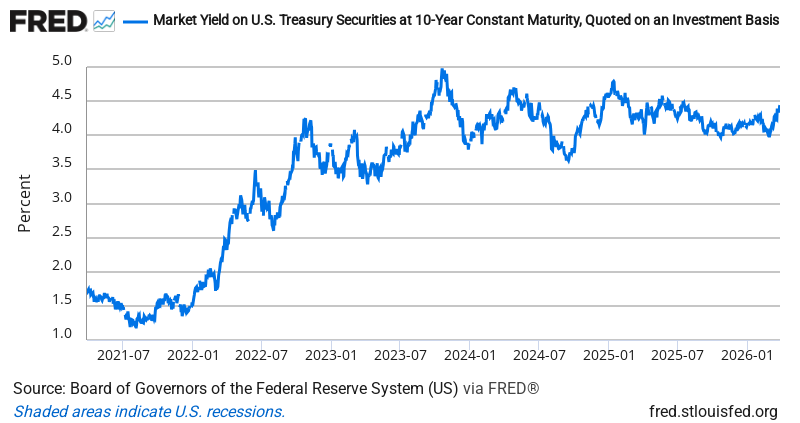
The 10-year Treasury yield closed at 4.44% Friday, up from 4.42% Thursday — but that tiny move masks some serious volatility this week. After dipping as low as 4.33% Wednesday, yields have now bounced back to their highest level since March 20th.
The whipsaw tells a story about nervous bond traders trying to figure out what comes next. When the 10-year drops to the low 4.3s, it signals investors are either worried about growth slowing or betting the Fed will cut rates faster than expected. When it snaps back above 4.4%, it means those concerns got overtaken by inflation worries or signs the economy is staying stronger than anticipated. This kind of back-and-forth usually happens when economic data is sending mixed signals — and that’s exactly where we are right now.
Here’s what matters: at 4.44%, the 10-year is still well above the 3.8% average of the past decade, which means borrowing costs remain elevated across the economy. Mortgages, corporate bonds, and stock valuations all move in sync with this benchmark rate. When yields stay high, it keeps pressure on everything from housing demand to business investment plans.
Many professional investors use periods like this to reassess their duration risk — how sensitive their portfolios are to interest rate moves. Historically, when the 10-year is bouncing around in a tight range above 4%, bond investors often favor shorter-term securities to avoid getting caught on the wrong side of a breakout move.
Bottom Line: Bond markets are stuck in a holding pattern, waiting for clearer signals about growth and inflation. Until they get them, expect more days like this — small moves that reflect big uncertainty underneath.
Source: Federal Reserve Economic Data (FRED)
ON1010.com provides economic education for investors. Nothing here is investment advice. Always consult a qualified financial advisor before making investment decisions.
Free Research
The economy moves fast. We make sure you move faster.
Economic data, policy shifts, and market signals — delivered to your inbox.
Subscribe Free