
Bond Market Sends Mixed Signals as 2-Year Yield Swings Daily
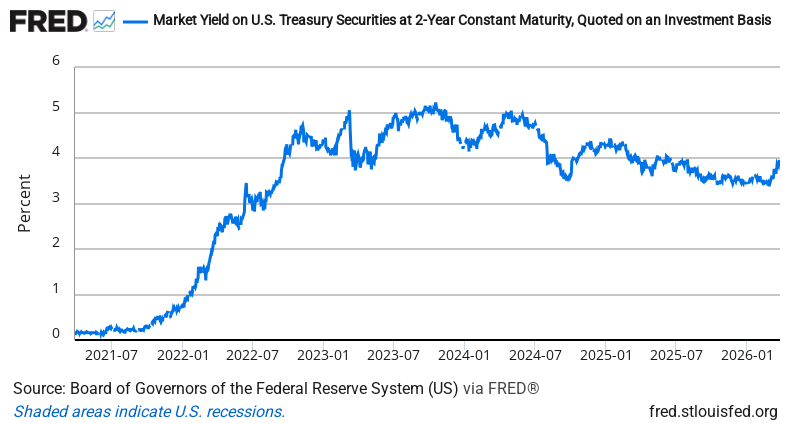
The 2-year Treasury yield dropped 8 basis points to 3.88% Thursday, erasing most of Wednesday’s jump — but that volatility itself tells the story. When short-term rates ping-pong like this, it usually means bond traders can’t agree on what the Fed will do next.
Look at the past week: 3.83% to 3.96% to 3.88% — that’s meaningful movement for a market that typically moves in tiny increments. The 2-year yield is essentially the market’s best guess for where Fed policy will be over the next 24 months, so this choppiness suggests real uncertainty about the economic path ahead. Either new data keeps surprising traders, or they’re genuinely split on whether the next Fed move is up, down, or sideways.
This matters because short-term rate volatility often precedes bigger shifts in monetary policy. The last time we saw this kind of daily whipsawing in 2-year yields was right before major Fed pivots — both the aggressive tightening cycle that started in 2022 and the emergency cuts during COVID. When the bond market can’t find its footing, it’s usually processing conflicting economic signals that haven’t been fully resolved yet.
Many professional investors use periods like this to reassess duration risk in their portfolios. Historically, when 2-year yields are this jumpy, investors have favored shorter-duration bonds and floating-rate instruments that can adjust as rates move. The uncertainty itself becomes a factor to manage, not just the rate level.
Bottom Line: When the market that prices Fed policy can’t sit still, it’s telling you something important about the road ahead — even if it doesn’t know exactly what that something is yet.
Source: Federal Reserve Economic Data (FRED)
ON1010.com provides economic education for investors. Nothing here is investment advice. Always consult a qualified financial advisor before making investment decisions.
Free Research
The economy moves fast. We make sure you move faster.
Economic data, policy shifts, and market signals — delivered to your inbox.
Subscribe Free