
Bond Market Whispers Tell a Different Story Than Headlines
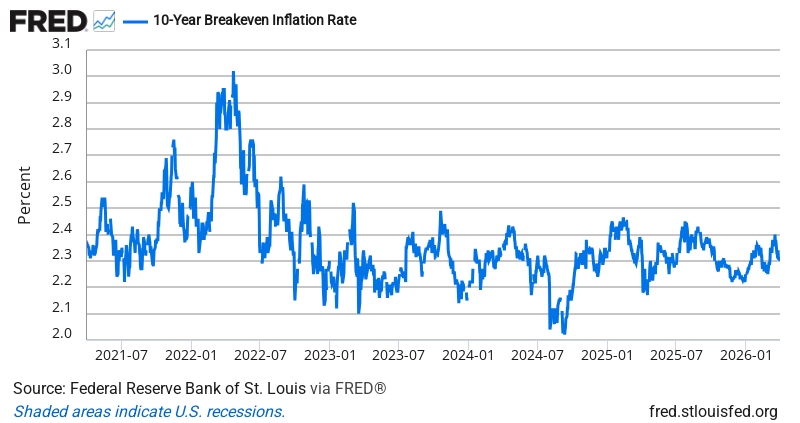
The 10-year breakeven inflation rate slipped to 2.3% yesterday, down a hair from 2.31% the day before. That’s barely a blip — but in a world where oil has spiked from $66 to $95 since the Strait of Hormuz closed, bond traders staying this calm is the real story.
Think about what 2.3% means: investors are betting that despite an active military crisis choking off 20% of global oil flows, inflation will average just 2.3% over the next decade. That’s barely above the Fed’s 2% target. Either bond traders see the energy shock as temporary, or they’re pricing in something darker — like enough economic weakness to offset the oil premium. The breakeven has been remarkably stable this week, hovering between 2.30% and 2.34% even as crude prices whipsawed.
Here’s the tension: every sustained 10% oil premium historically adds about 0.6% to CPI. With oil up 44% from pre-crisis levels, we could see monthly CPI prints with a 1-handle. Yet long-term inflation expectations remain anchored. That suggests either exceptional faith in the Fed’s ability to crush demand, or belief that this crisis resolves quickly.
Many professional investors use breakeven rates as a hedge against inflation surprises — when breakevens are low relative to actual inflation risks, TIPS can outperform nominal Treasuries. Others watch for breakeven volatility as a signal of broader market stress. Historically, when geopolitical shocks hit energy but breakevens stay calm, it often means bond traders are pricing in recession risk rather than inflation risk.
Bottom Line: Bond markets are betting this oil shock either ends quickly or tanks growth enough to keep inflation in check. That’s a very different story than the one crude oil is telling.
Source: Federal Reserve Economic Data (FRED)
ON1010.com provides economic education for investors. Nothing here is investment advice. Always consult a qualified financial advisor before making investment decisions.
Free Research
The economy moves fast. We make sure you move faster.
Economic data, policy shifts, and market signals — delivered to your inbox.
Subscribe Free