
10-Year Treasury Yield Drops to 4.3% as Bond Rally Gains Steam
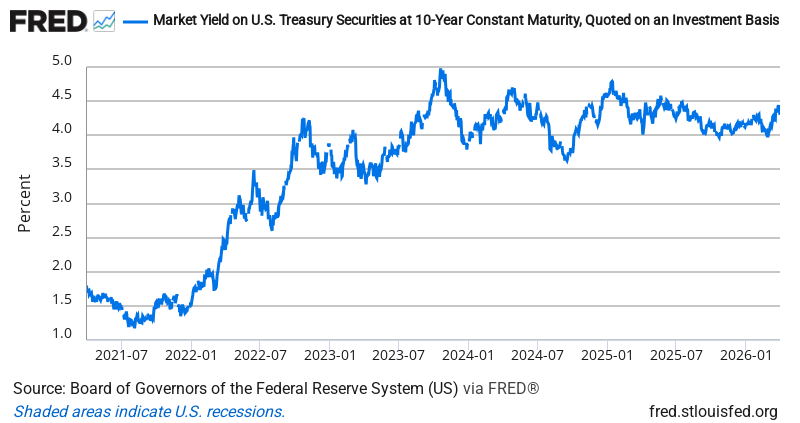
The 10-year Treasury yield fell to 4.3% yesterday, down from 4.35% the day before and continuing a week-long slide from last Monday’s 4.44% peak. That’s a 14 basis point drop in just five trading days — the kind of move that gets professional bond traders’ attention.
This isn’t just noise. When the 10-year yield moves this consistently in one direction, it usually signals a shift in investor expectations about either economic growth or Federal Reserve policy. Bond prices rise (yields fall) when investors get nervous about the economy’s momentum or when they start betting the Fed will need to cut rates sooner than expected. The steady march down from 4.44% suggests something fundamental is changing in how the market views the next 6-12 months.
Here’s why this matters beyond bonds: the 10-year Treasury is the economy’s reference rate. When it drops, mortgage rates typically follow — potentially reigniting housing demand. Corporate borrowing costs ease — making it cheaper for businesses to invest and expand. And stock valuations get a boost — when bonds pay less, investors often demand lower returns from stocks, pushing prices higher.
What This Means for Your Portfolio
Historically, sustained drops in the 10-year yield have been good news for interest-sensitive sectors like real estate and utilities. Many professional investors also view falling long-term rates as a green light for growth stocks, since their future cash flows become more valuable when discounted at lower rates. Bond investors, meanwhile, are enjoying capital gains as prices rise alongside the rally.
Bottom Line: A 14 basis point drop in five days isn’t random market noise — it’s the bond market telling us something about the economic outlook has shifted. The question now is whether this is a temporary pause or the start of a longer-term trend toward lower rates.
Source: Federal Reserve Economic Data (FRED)
ON1010.com provides economic education for investors. Nothing here is investment advice. Always consult a qualified financial advisor before making investment decisions.
Free Research
The economy moves fast. We make sure you move faster.
Economic data, policy shifts, and market signals — delivered to your inbox.
Subscribe Free