
Mortgage Rates Hit Six-Week High as Spring Buying Season Heats Up
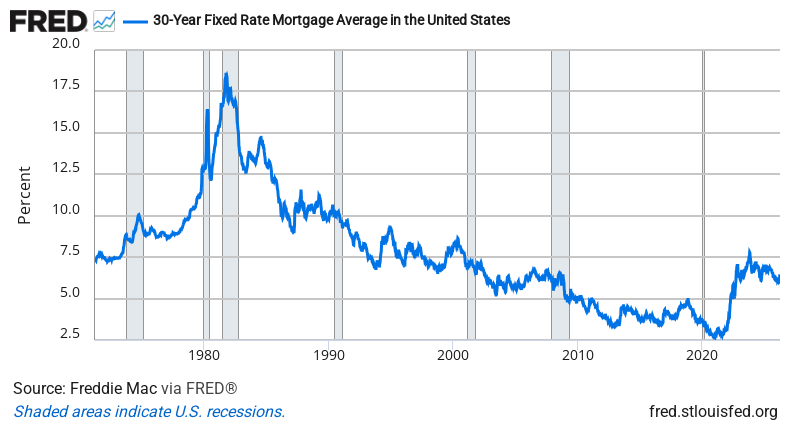
The 30-year mortgage rate jumped to 6.46% this week, up from 6.38% last week — the highest level since mid-February. That’s five straight weeks of increases, with rates climbing nearly half a percentage point since they bottomed at 6.0% in early March.
This isn’t just about bond market jitters. The spring home-buying season is colliding with a Federal Reserve that’s showing no urgency to cut rates, creating a perfect storm for housing affordability. Every eighth of a percentage point matters enormously here: on a $400,000 mortgage, this week’s rate increase alone adds about $20 to the monthly payment. The cumulative rise since March? That’s an extra $100+ per month for the same house.
The bigger puzzle is timing. Mortgage rates typically track the 10-year Treasury, but they’ve been more volatile lately as lenders price in credit risk and liquidity concerns in a slowing economy. We’re seeing the classic housing market catch-22: buyers rushing to lock in rates before they go higher, while sellers hold back hoping for better conditions. That dynamic usually resolves with either a sharp correction in prices or a prolonged period of low transaction volume.
Many professional investors view rising mortgage rates as a leading indicator for housing market stress, which eventually spreads to consumer spending and construction employment. Real estate investment trusts (REITs) and homebuilder stocks historically underperform during sustained rate increases, while fixed-income investors start looking more closely at mortgage-backed securities for yield opportunities.
Bottom Line: Housing affordability is deteriorating in real-time, and spring buyers are getting squeezed. The question isn’t whether higher rates will cool the market — it’s how quickly that cooldown hits the broader economy.
Source: Federal Reserve Economic Data (FRED)
ON1010.com provides economic education for investors. Nothing here is investment advice. Always consult a qualified financial advisor before making investment decisions.
Free Research
The economy moves fast. We make sure you move faster.
Economic data, policy shifts, and market signals — delivered to your inbox.
Subscribe Free