
Bond Market Drops Inflation Expectations as Crisis Fatigue Sets In
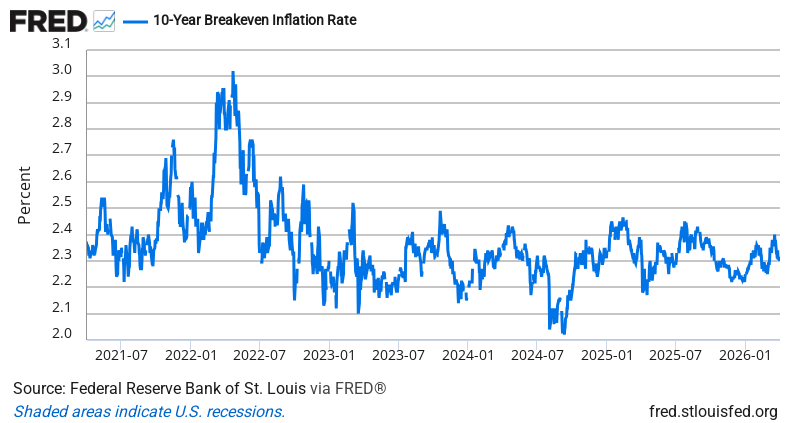
The 10-year breakeven inflation rate ticked up to 2.34% yesterday, but that modest 0.03 percentage point rise tells a more interesting story than the headline suggests. Bond traders are pricing in long-term inflation right at the Fed’s target, even with oil trading near $95 and the Strait of Hormuz closed for over a month. Either markets believe this energy shock will fade, or they’re betting the Fed will crush demand before inflation becomes entrenched.
This is classic crisis fatigue. When the Hormuz closure first hit in late February, breakevens spiked as traders priced in sustained energy inflation. But after six weeks of $95 oil, markets are shrugging. The 2.34% reading suggests bond investors think either the crisis resolves soon, or the Fed keeps policy tight enough to offset energy-driven price pressures. That’s a big bet considering every sustained 10% oil premium historically adds about 0.6% to headline inflation. At current energy prices, we could see monthly CPI prints with a “1” handle — yet long-term expectations remain anchored.
Historically, when breakevens stay calm during energy shocks, it signals either exceptional Fed credibility or dangerous complacency. Many professional investors view stable breakevens as a green light for risk assets, since it suggests the central bank won’t need to slam the brakes. But others see it as markets underpricing the persistence of supply-driven inflation, especially with Iran’s new leadership vowing to keep the Strait closed.
Bottom Line: Markets are betting this energy crisis ends before it becomes an inflation crisis. If they’re wrong, that 2.34% reading could look quaint by summer.
Source: Federal Reserve Economic Data (FRED)
ON1010.com provides economic education for investors. Nothing here is investment advice. Always consult a qualified financial advisor before making investment decisions.
Free Research
The economy moves fast. We make sure you move faster.
Economic data, policy shifts, and market signals — delivered to your inbox.
Subscribe Free