
Jobs Growth Stumbles to Weakest Pace in Over a Year
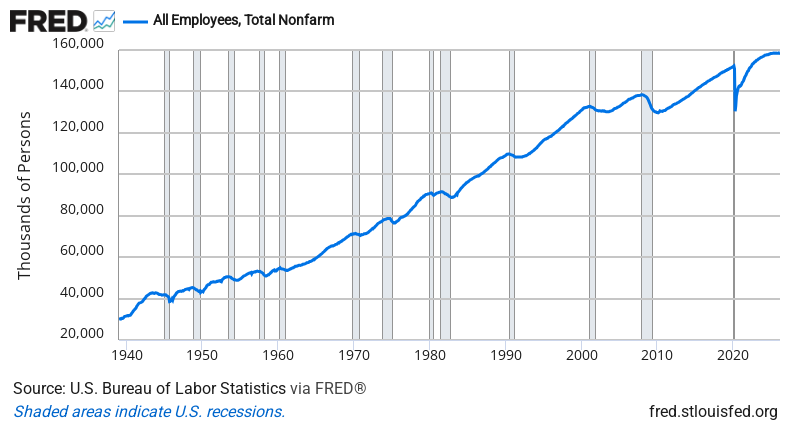
The U.S. economy added just 178,000 jobs in March — the slowest pace since early 2025 and well below the 200,000+ monthly average we’ve grown accustomed to. Even more telling: this marks the third straight month where job growth has decelerated, suggesting the labor market is downshifting just as energy costs surge.
Here’s what makes this concerning. Job growth isn’t just slowing — it’s slowing at exactly the wrong time. With oil prices up 44% since late February due to the Strait of Hormuz crisis, businesses are facing a double squeeze: higher input costs and now cooling demand for workers. The 178,000 gain represents barely 0.1% monthly growth, down from the 0.2-0.3% pace that sustained the expansion. Historically, when job growth falls below 150,000 consistently, it signals the economy is losing momentum. We’re not there yet, but the trend is unmistakable.
Many professional investors view labor market deceleration as a leading indicator for broader economic softening. In this environment, with energy inflation pressuring corporate margins and the Fed pausing rate cuts, investors have historically rotated toward defensive sectors and quality companies with pricing power. The combination of slowing job growth and elevated energy costs often leads to increased focus on consumer staples, utilities, and companies with strong balance sheets that can weather margin compression.
Bottom Line: The labor market is tapping the brakes just as energy costs accelerate — a combination that historically doesn’t end well for risk assets. Watch for sub-150,000 job growth in the coming months as the real warning sign.
Source: Federal Reserve Economic Data (FRED)
ON1010.com provides economic education for investors. Nothing here is investment advice. Always consult a qualified financial advisor before making investment decisions.
Free Research
The economy moves fast. We make sure you move faster.
Economic data, policy shifts, and market signals — delivered to your inbox.
Subscribe Free