
March Jobs Report: Why 4.3% Unemployment Isn’t the Victory Lap It Seems
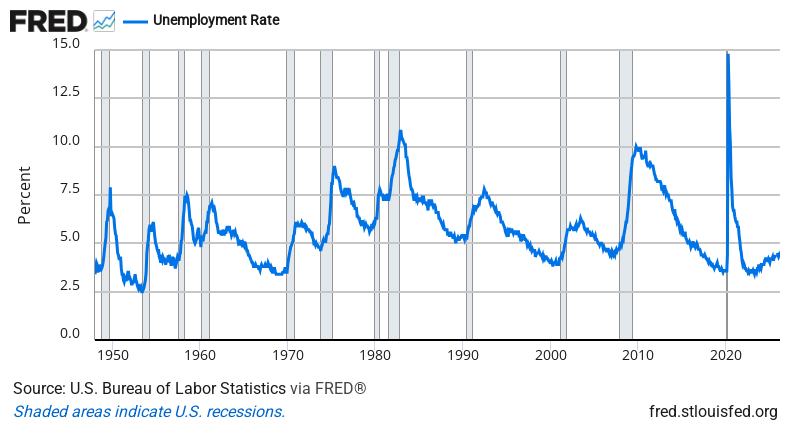
The unemployment rate ticked down to 4.3% in March from February’s 4.4%, marking the third month in four where joblessness has held in this narrow band. On paper, that looks like stability. In reality, it’s masking some serious crosscurrents beneath the surface.
Here’s what makes this number more complicated than it appears: we’re seeing labor market resilience at the exact moment when energy shocks and geopolitical chaos should be rattling employers. The Strait of Hormuz closure since late February has sent oil from $66 to $95, yet businesses are still hiring. That suggests either remarkable economic durability or a dangerous lag between energy price spikes and their real-world impact on employment. Historical precedent points toward the latter — labor markets typically trail energy shocks by several months, not weeks.
The Fed’s already paused rate cuts as inflation fears resurface, which means the traditional policy backstop for labor markets is off the table. Meanwhile, corporate margins are getting squeezed by higher energy costs, particularly in energy-intensive sectors. Companies may be maintaining headcount now, but if oil stays elevated through summer, that calculus changes fast.
Many professional investors use unemployment stability like this as a reason to stay positioned in growth assets, particularly when the headline number is improving. But in an environment where energy costs are reshaping the entire macro picture, historical playbooks about low unemployment driving continued expansion may not apply. Some are already rotating toward defensive positions, anticipating that labor market strength today becomes vulnerability tomorrow when energy costs fully filter through corporate cost structures.
Bottom Line: A 4.3% unemployment rate would normally signal all clear for risk assets. But when you’re getting labor market strength alongside $95 oil and a closed Strait of Hormuz, that stability might be more fragile than it looks.
Source: Federal Reserve Economic Data (FRED)
ON1010.com provides economic education for investors. Nothing here is investment advice. Always consult a qualified financial advisor before making investment decisions.
Free Research
The economy moves fast. We make sure you move faster.
Economic data, policy shifts, and market signals — delivered to your inbox.
Subscribe Free