
Bond Markets Signal Cooling Fed Expectations
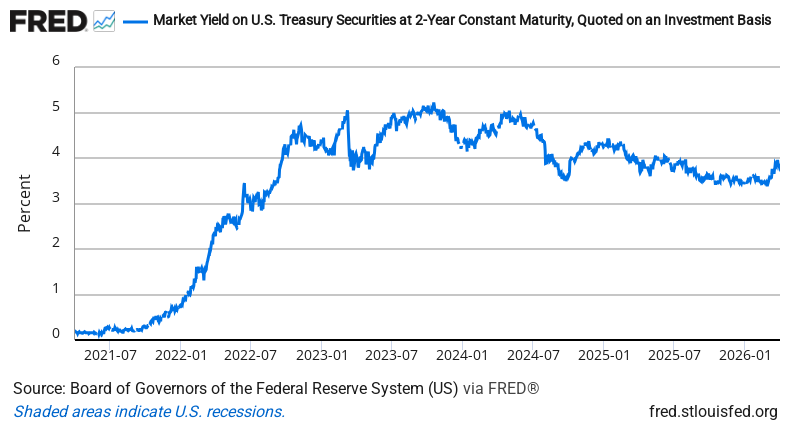
The 2-year Treasury yield dropped to 3.79% on April 2nd, continuing a steady descent from 3.96% just a week ago. That’s a meaningful move in bond world — where traders are quietly betting the Federal Reserve’s tightening cycle might be closer to done than many realize.
Here’s what makes this interesting: the 2-year yield essentially mirrors what bond traders expect the Fed to do over the next couple years. When it falls this consistently, it’s not random noise — it’s the market repricing Fed policy. Either economic data is softening enough to pause rate hikes, or traders think the central bank has already done enough damage to slow growth. Both scenarios point toward a potential inflection point.
The steady decline from nearly 4% suggests bond investors are positioning for a Fed that’s shifting from aggressive to cautious. Historically, when 2-year yields peak and start trending lower, it often signals we’re in the final innings of a tightening cycle. The question becomes whether this marks a pause before more hikes, or the actual top. Corporate profit margins — still holding up in most sectors — suggest the economy isn’t breaking yet, but bond traders rarely wait for confirmation.
Many professional investors use falling 2-year yields as a signal to reconsider duration risk in their portfolios. When rates appear to be peaking, longer-term bonds become more attractive relative to cash. Growth stocks also tend to benefit when the Fed’s hawkish stance moderates, since lower discount rates make future earnings more valuable today.
Bottom Line: Bond markets are quietly suggesting the Fed’s work might be nearly done — a shift that could ripple through everything from mortgage rates to tech stocks in the coming months.
Source: Federal Reserve Economic Data (FRED)
ON1010.com provides economic education for investors. Nothing here is investment advice. Always consult a qualified financial advisor before making investment decisions.
Free Research
The economy moves fast. We make sure you move faster.
Economic data, policy shifts, and market signals — delivered to your inbox.
Subscribe Free