
Fed Funds Rate Holds Dead Steady as Energy Crisis Reshapes Policy Calculus
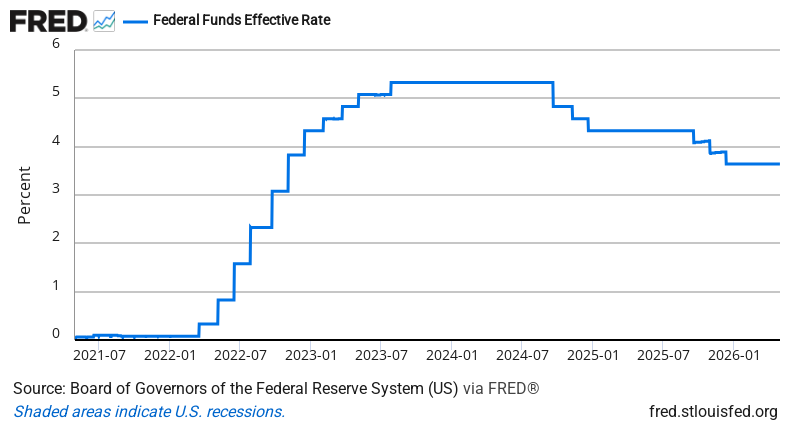
The effective federal funds rate stayed locked at 3.64% through the end of April, marking six consecutive days without movement as the Federal Reserve holds its position amid the ongoing Strait of Hormuz crisis. This stability reflects a central bank caught between competing forces: pre-crisis momentum toward rate cuts now colliding with oil-driven inflation fears that have pushed crude from $66 to $95 since late February.
The Fed’s paralysis here tells a bigger story about how external shocks can instantly rewrite monetary policy. Before Iran closed the Strait following US-Israel strikes, the Fed was on a gradual easing path with inflation settling around 2.5%. Now, with every $10 oil premium adding roughly 0.6% to CPI, policymakers are staring at potential monthly inflation prints with a 1-handle. The effective rate staying glued to its target shows markets aren’t pricing in policy surprises, but they’re also not expecting the cuts that seemed likely just months ago.
This “higher-for-longer” environment creates a tricky landscape for investors. Historically, when the Fed pauses during external crises, bond investors start demanding higher yields to compensate for inflation risk while equity investors rotate toward sectors that benefit from energy price spikes. Many professional investors in this type of environment focus on companies with pricing power and energy exposure, while avoiding long-duration bonds that get hammered when inflation expectations rise.
Bottom Line: A steady fed funds rate during an energy crisis isn’t stability — it’s policy paralysis. The Fed’s next move depends more on Middle East headlines than domestic data, and that makes every investor a geopolitical analyst whether they want to be or not.
Source: Federal Reserve Economic Data (FRED)
ON1010.com provides economic education for investors. Nothing here is investment advice. Always consult a qualified financial advisor before making investment decisions.
Free Research
The economy moves fast. We make sure you move faster.
Economic data, policy shifts, and market signals — delivered to your inbox.
Subscribe Free