
Treasury Yields Hover Near Multi-Month Highs as Bond Market Tests Fed’s Resolve
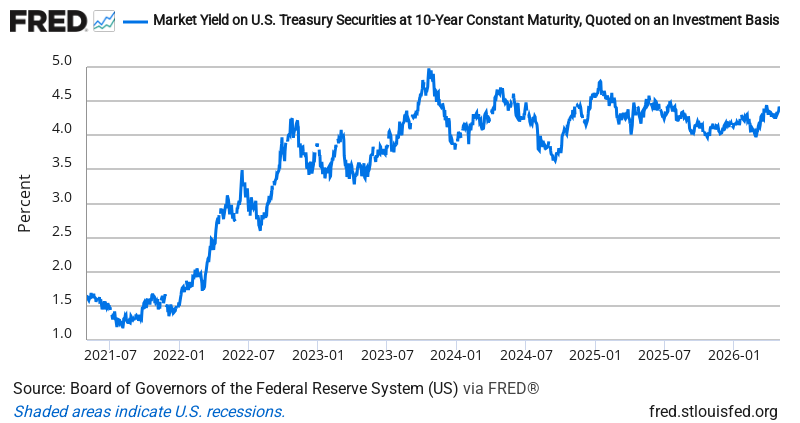
The 10-year Treasury yield dipped to 4.39% Thursday, down just one basis point from the previous day’s 4.40%. But zoom out and the story becomes clearer: yields have climbed nearly 10 basis points over the past week, putting the benchmark rate at levels not seen since late 2023.
This isn’t random noise. Bond traders are pricing in a more persistent inflation problem than many expected just months ago. When the 10-year yield sits above 4.3%, it’s telling you the market thinks the Federal Reserve’s work isn’t done — and that higher rates might be the new normal, not a temporary detour.
Here’s the puzzle: corporate earnings have been solid, yet higher borrowing costs are starting to bite. Real estate transactions are slowing as mortgage rates track Treasury yields higher. Even high-grade corporate bonds are feeling pressure, with investment-grade spreads widening as companies face steeper refinancing costs. This creates a feedback loop where higher rates slow economic activity, but that slowdown might be exactly what’s needed to cool persistent price pressures.
Historically, when the 10-year yield breaks above 4.3% and stays there, professional investors start shifting allocations. Many look toward shorter-duration bonds that benefit from higher reinvestment rates, while others rotate out of growth stocks that struggle when their future cash flows get discounted at higher rates. Value stocks and dividend-paying equities often find favor as their current income becomes more attractive relative to risk-free alternatives.
Bottom Line: The bond market is stress-testing the economy’s tolerance for higher rates. If yields hold above 4.3%, expect more rotation from rate-sensitive assets toward investments that can handle — or benefit from — a higher-rate world.
Source: Federal Reserve Economic Data (FRED)
ON1010.com provides economic education for investors. Nothing here is investment advice. Always consult a qualified financial advisor before making investment decisions.
Free Research
The economy moves fast. We make sure you move faster.
Economic data, policy shifts, and market signals — delivered to your inbox.
Subscribe Free