
Bond Market Gives Back Ground on Inflation Bets
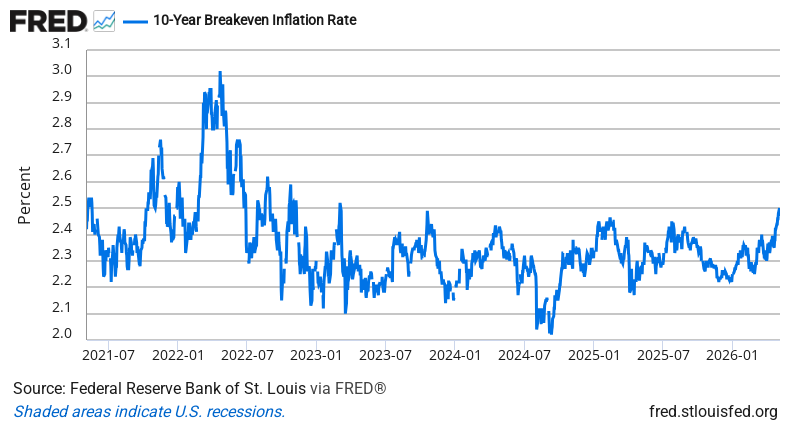
The 10-year breakeven inflation rate pulled back to 2.47% Monday, down from 2.5% the day before — a small but telling retreat from recent highs. What makes this interesting: the bond market seems to be second-guessing whether the energy shock from the Strait of Hormuz closure will stick around long enough to reset inflation expectations permanently.
Breakevens have been climbing steadily since the military crisis erupted in late February, reflecting traders pricing in higher long-term inflation as oil spiked from $66 to $95. But Monday’s dip suggests some uncertainty about whether this energy premium becomes structural or fades if the crisis resolves. The bigger picture remains worrying for bonds: even at 2.47%, breakevens are still well above the Fed’s 2% target, and every sustained 10% oil premium historically adds about 0.6% to CPI. With monthly inflation prints potentially hitting 1-handle territory, the Fed’s pause on rate cuts looks increasingly justified.
This environment typically puts bond investors in a defensive crouch. Many professional traders consider rising breakevens a signal to shorten duration exposure, as longer-term bonds get hit hardest when inflation expectations climb. Historically, energy-driven inflation spikes have led investors to look at Treasury Inflation-Protected Securities (TIPS) and commodities as hedges, while traditional long-term bonds struggle until inflation expectations stabilize.
Bottom Line: The bond market is wrestling with whether the current energy crisis resets inflation permanently or proves temporary. Until that question gets answered, expect continued volatility in breakevens and pressure on longer-duration assets.
Source: Federal Reserve Economic Data (FRED)
ON1010.com provides economic education for investors. Nothing here is investment advice. Always consult a qualified financial advisor before making investment decisions.
Free Research
The economy moves fast. We make sure you move faster.
Economic data, policy shifts, and market signals — delivered to your inbox.
Subscribe Free