
Fed Rate Holds Dead Steady as Markets Digest Energy Inflation
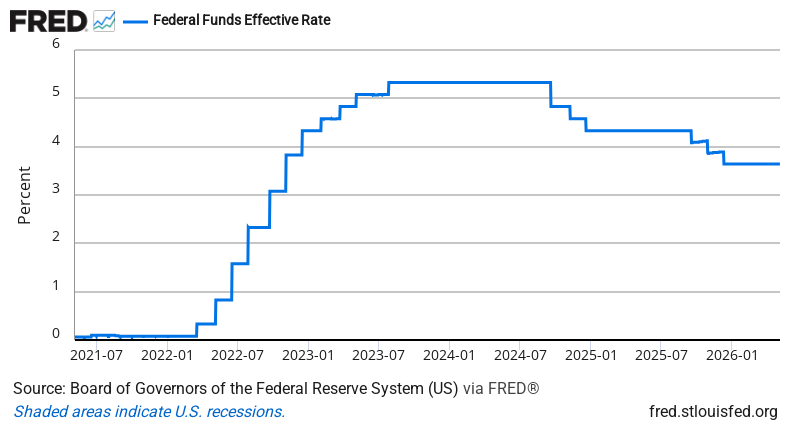
The effective federal funds rate is sitting exactly where it has for weeks now — locked at 3.64% with zero movement across the past six trading sessions. In normal times, this kind of stability would signal smooth sailing. But these aren’t normal times.
The Fed’s overnight rate isn’t moving because policymakers are essentially frozen. With the Strait of Hormuz closed since February 28 and oil prices having spiked from $66 to $95, the central bank faces a classic stagflation dilemma. Cut rates to support growth and risk fueling energy-driven inflation, or hold steady and hope the economy can absorb higher energy costs without tipping into recession. For now, they’re choosing the latter.
This stalemate reflects a broader shift in Fed thinking. Just months ago, rate cuts were on the table as inflation seemed to settle around 2.5%. Now, with every sustained $10 oil premium adding roughly 0.6% to consumer prices, officials are bracing for monthly inflation prints that could start with a “1” handle. The market has already priced out rate cuts for 2026.
Historically, when the Fed goes into “wait and see” mode during energy shocks, many professional investors start positioning more defensively. Bond traders often look for shorter durations to avoid getting caught in rising rate cycles. Equity investors tend to favor companies with pricing power — those that can pass through higher costs without losing market share.
Bottom Line: A stable fed funds rate usually signals policy certainty, but this stability masks deep uncertainty about the inflation outlook. The real question isn’t whether rates will stay here — it’s how long the Fed can afford to stay paralyzed while energy prices reshape the economic landscape.
Source: Federal Reserve Economic Data (FRED)
ON1010.com provides economic education for investors. Nothing here is investment advice. Always consult a qualified financial advisor before making investment decisions.
Free Research
The economy moves fast. We make sure you move faster.
Economic data, policy shifts, and market signals — delivered to your inbox.
Subscribe Free