
Bond Markets Signal Cooling Inflation Expectations Despite Energy Crisis
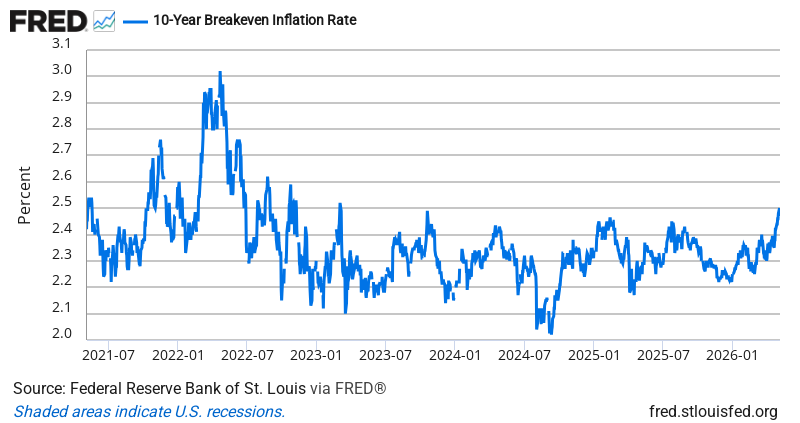
The 10-year breakeven inflation rate dropped to 2.42% yesterday, down from 2.47% the day before and continuing a week-long slide from 2.50%. That’s a puzzle worth solving: why are long-term inflation expectations cooling even as oil trades near $95 and the Strait of Hormuz remains closed?
The answer likely lies in what breakevens actually measure. This isn’t just inflation expectations — it’s the market’s bet on average inflation over the next decade. Even if energy shocks push CPI above 3% this year, bond investors may be betting that oil prices normalize and the Fed’s credibility keeps long-term inflation anchored. The 2.42% reading sits right at the Fed’s comfort zone, suggesting markets still trust the central bank’s inflation-fighting resolve despite the current energy crisis.
But here’s the tension: spot inflation is already running hot from the $25/barrel oil premium, and every sustained 10% increase in crude typically adds 0.6% to CPI. If the Hormuz situation persists, this breakeven reading may prove optimistic. Historically, energy shocks that last more than six months tend to push inflation expectations higher, not lower.
Many professional investors use breakeven movements to gauge whether to emphasize real assets or nominal bonds in their portfolios. When breakevens fall while actual inflation risks are rising — like now — some traders look for opportunities in commodities or inflation-protected securities (TIPS) that might be mispriced relative to the actual inflation path ahead.
Bottom Line: The bond market is betting that current energy-driven inflation will fade, but with the Strait still closed and no resolution in sight, that optimism may be tested. The gap between market expectations and energy reality is worth watching closely.
Source: Federal Reserve Economic Data (FRED)
ON1010.com provides economic education for investors. Nothing here is investment advice. Always consult a qualified financial advisor before making investment decisions.
Free Research
The economy moves fast. We make sure you move faster.
Economic data, policy shifts, and market signals — delivered to your inbox.
Subscribe Free