
Fed’s Target Rate Holds Rock-Steady at 3.64% — But the Real Story Is What’s Not Moving
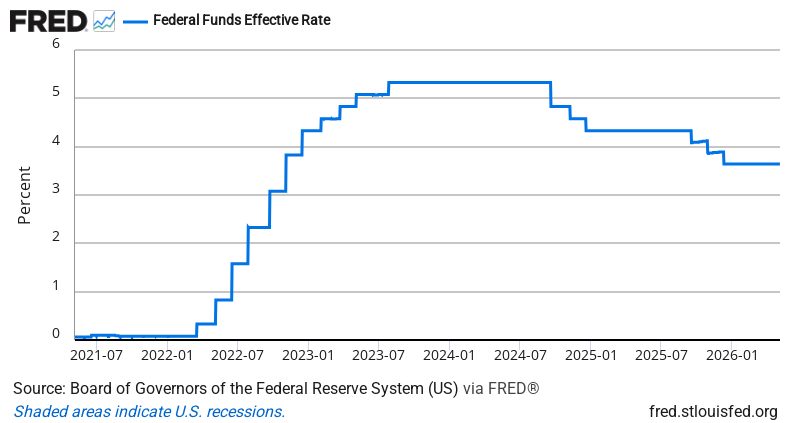
The effective federal funds rate stayed glued to 3.64% for the sixth straight trading day, a level of precision that would make a Swiss watchmaker jealous. But in a world where oil has spiked 44% and the Strait of Hormuz remains closed, this stability isn’t boring — it’s telling.
The Fed’s target rate is holding steady because policymakers can’t move. With crude prices locked near $95 following the Strait closure, every basis point cut risks stoking inflation just as energy costs slam consumers. Meanwhile, the actual market rate tracking perfectly to target suggests banks aren’t stressed for liquidity — they’re just waiting to see which way the inflation winds blow.
This creates a fascinating tension. Normally, extended rate stability signals policy certainty. But right now, it reflects policy paralysis. The Fed had been eyeing cuts before the energy shock hit, and Chair Powell’s team knows higher oil prices feed through to core inflation with a 3-6 month lag. They’re essentially frozen until they see whether $95 oil sticks or the strategic reserve releases can push prices lower.
Historically, when the Fed holds rates steady during external shocks, professional investors often look toward sectors that benefit from higher energy costs — particularly US energy producers and pipeline companies, since America is a net energy exporter. Many also consider inflation-protected securities (TIPS) and shorter-duration bonds that reset faster if the Fed eventually needs to hike rather than cut.
Bottom Line: Perfect rate stability during a major oil shock isn’t stability at all — it’s a central bank buying time while energy markets decide America’s inflation path.
Source: Federal Reserve Economic Data (FRED)
ON1010.com provides economic education for investors. Nothing here is investment advice. Always consult a qualified financial advisor before making investment decisions.
Free Research
The economy moves fast. We make sure you move faster.
Economic data, policy shifts, and market signals — delivered to your inbox.
Subscribe Free