
10-Year Treasury Yield Drops to 4.36% as Bond Rally Gains Steam
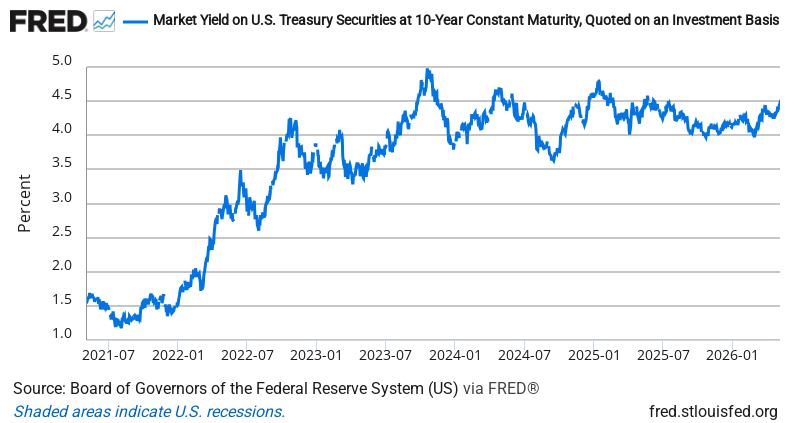
The 10-year Treasury yield fell 7 basis points to 4.36% yesterday, extending a modest rally that’s pushed yields down from last week’s 4.45% peak. That’s the lowest close since early May, with bonds finding their footing even as equity markets continue their relentless climb.
Here’s what’s interesting: this bond rally is happening despite persistent energy inflation from the Strait of Hormuz crisis. Oil is still trading near $95 — up 44% from pre-crisis levels — which should theoretically keep inflation expectations elevated and bonds under pressure. Instead, we’re seeing yield compression that suggests either investors are betting the energy shock proves temporary, or they’re positioning for slower growth ahead.
The decline breaks a pattern of rising yields that dominated April as markets priced out Fed rate cuts. With the Strait closure now in its third month and geopolitical risks showing no signs of cooling, bond investors may be hedging against the possibility that sustained energy prices eventually slow economic activity. Historically, oil shocks tend to be stagflationary — higher prices, slower growth — and the bond market often anticipates the “slower growth” part before it shows up in the data.
In this type of environment, many professional investors consider extending duration in their bond allocations, particularly if they believe current energy prices are unsustainable. Falling yields also support dividend-paying stocks and REITs, though the sector rotation data shows money still flowing heavily into growth and technology rather than yield-sensitive plays.
Bottom Line: The bond market is telling a different story than equities right now — one where higher energy costs eventually matter more for growth than current earnings momentum suggests.
Source: Federal Reserve Economic Data (FRED)
ON1010.com provides economic education for investors. Nothing here is investment advice. Always consult a qualified financial advisor before making investment decisions.
Free Research
The economy moves fast. We make sure you move faster.
Economic data, policy shifts, and market signals — delivered to your inbox.
Subscribe Free