
Core Inflation Holds Steady at 2.4% — But the Monthly Print Has Investors Asking New Questions
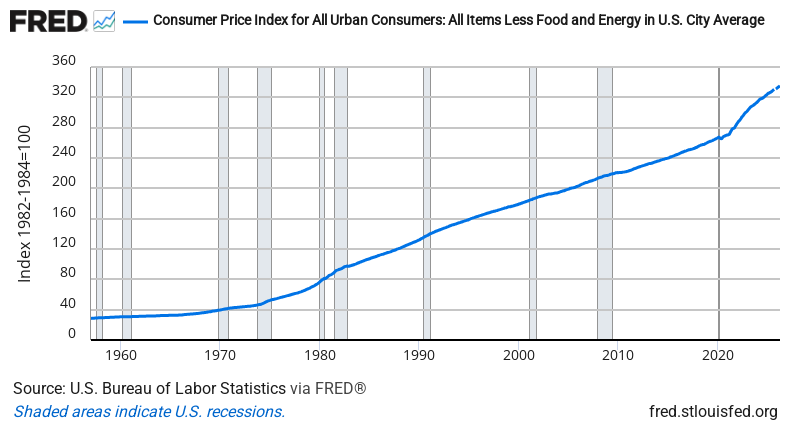
Core CPI rose 0.38% in April, keeping the annual rate locked at 2.37% for the second straight month. That’s the kind of stability the Fed dreams about — except it’s happening at nearly a full percentage point above their target.
Here’s the puzzle: monthly core inflation has been remarkably consistent lately, bouncing between 0.3% and 0.4% for six straight months. In normal times, that would be boring. But when you’re sitting at 2.4% annually and the Fed is still debating rate cuts, boring becomes fascinating. This isn’t the volatile, unpredictable inflation of 2022 — it’s something more stubborn. The economy seems to have found a new equilibrium around 2.4%, and it’s comfortable there.
This matters because it’s forcing a rethink of what “normal” looks like. If productivity gains are strong enough to support 2.4% core inflation without squeezing profit margins, maybe the Fed’s 2% target is the outlier, not the current reading. The 1990s taught us that technological productivity booms can change the rules. The question is whether AI and automation are creating a similar dynamic today.
Many professional investors are watching this tension closely. Bond markets have been pricing in a world where 2% inflation returns eventually. If 2.4% becomes the new normal, yields may need to reset higher across the curve. Historically, periods of stable but elevated inflation have favored assets that can adjust pricing power in real-time — think dividend-growth stocks and real estate over long-duration bonds.
Bottom Line: Core inflation isn’t falling to 2%, but it’s not accelerating either. The Fed may need to decide whether to chase an old target or acknowledge a new reality.
Source: Federal Reserve Economic Data (FRED)
ON1010.com provides economic education for investors. Nothing here is investment advice. Always consult a qualified financial advisor before making investment decisions.
Free Research
The economy moves fast. We make sure you move faster.
Economic data, policy shifts, and market signals — delivered to your inbox.
Subscribe Free