
Bond Traders Are Pricing in Something the Fed Hasn’t Said Yet
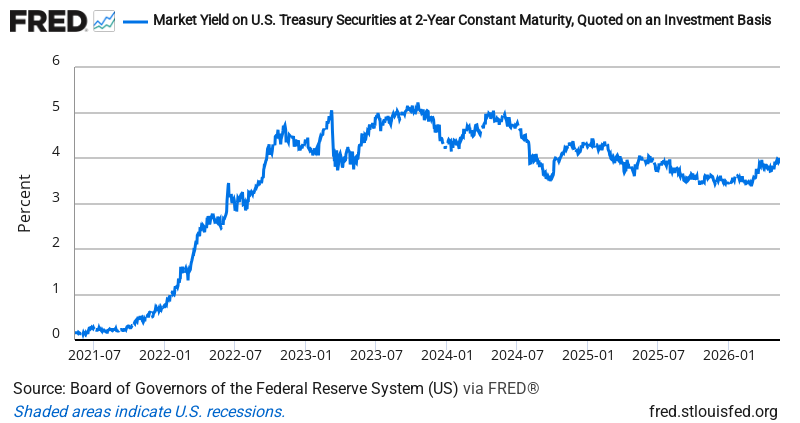
The 2-year Treasury yield jumped to 4.0% Monday, up from 3.95% Friday — a small move that carries big implications. When the 2-year moves, it’s not random noise. It’s the bond market’s real-time vote on where Fed policy is headed.
Here’s what’s interesting: this push higher comes despite no new Fed commentary over the weekend. Bond traders are either pricing in a hawkish surprise at the next FOMC meeting, or they’re betting that recent economic data will force the Fed’s hand sooner than expected. The 2-year yield is essentially the market’s Fed funds rate prediction machine — and right now, it’s saying rates might stay higher for longer than many investors assumed just last week.
This fits a pattern we’ve seen before. When the 2-year starts climbing without obvious catalyst, it often precedes policy shifts by weeks or months. Think early 2022, when 2-year yields began rising well before the Fed pivoted to aggressive tightening. Markets price in changes before officials announce them.
What This Means for Your Portfolio: Many professional investors use 2-year yield movements as an early warning system for broader rate shifts. When the 2-year climbs, it historically pressures growth stocks (higher discount rates hurt long-duration assets) while potentially benefiting financial sector names that profit from wider interest margins. Bond investors often view rising 2-year yields as a signal to consider shorter-duration strategies.
Bottom Line: The bond market thinks the Fed’s next move might be more hawkish than consensus expects — or that economic data will force their hand. When the 2-year Treasury starts moving without headlines, smart money pays attention.
Source: Federal Reserve Economic Data (FRED)
ON1010.com provides economic education for investors. Nothing here is investment advice. Always consult a qualified financial advisor before making investment decisions.
Free Research
The economy moves fast. We make sure you move faster.
Economic data, policy shifts, and market signals — delivered to your inbox.
Subscribe Free