
Mortgage Rates Hit a Wall at 6.36% — The Housing Market’s New Reality
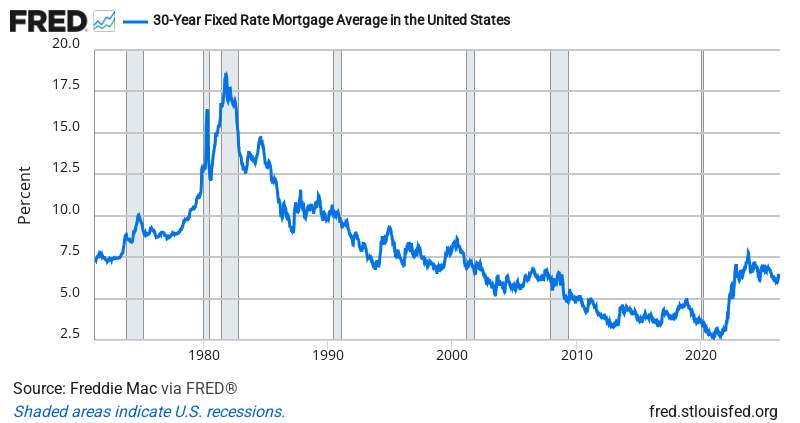
The 30-year mortgage rate ticked down to 6.36% this week from 6.37% — barely a blip, but that’s exactly the story. After bouncing between 6.23% and 6.37% for the past month, rates have essentially flatlined in a narrow band that’s pricing millions of potential homebuyers out of the market.
Here’s what’s fascinating: mortgage rates typically move with the 10-year Treasury, but they’ve been stubbornly sticky even as bond markets have shown more volatility. This suggests the mortgage market has found its new equilibrium — and it’s not pretty for housing demand. At 6.36%, the monthly payment on a $400,000 home is roughly $2,500, compared to about $1,700 when rates were near 3% in 2021. That’s not a temporary shock anymore; it’s the new baseline that both buyers and sellers are slowly accepting.
The broader economic signal here is clear: the era of cheap money is definitively over, and housing — the most interest-rate-sensitive sector — is adjusting to a fundamentally different cost of capital. This matters beyond real estate because housing wealth drives consumer spending, and consumer spending drives about 70% of GDP. When mortgage rates stay elevated, it creates a feedback loop: fewer home sales, less wealth creation, more cautious consumers.
Many professional investors are watching housing-adjacent sectors closely in this environment. Historically, persistently high mortgage rates have led investors to favor rental property REITs over homebuilders, and to look for value in companies that benefit from lower housing turnover — think home improvement retailers and moving services that see less business.
Bottom Line: Mortgage rates aren’t crashing or spiking — they’re just expensive and staying that way. The housing market is learning to live with 6%+ rates, but the adjustment is far from over.
Source: Federal Reserve Economic Data (FRED)
ON1010.com provides economic education for investors. Nothing here is investment advice. Always consult a qualified financial advisor before making investment decisions.
Free Research
The economy moves fast. We make sure you move faster.
Economic data, policy shifts, and market signals — delivered to your inbox.
Subscribe Free