
The 10-Year Treasury Yield Just Hit a Wall at 4.46% — And That’s the Real Story
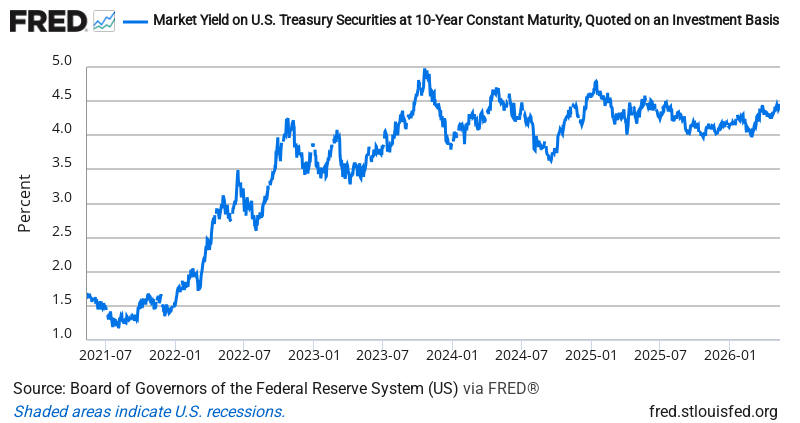
The 10-year Treasury yield has been stuck at 4.46% for two straight days after a week of steady climbing from 4.36% to current levels. Sometimes the most interesting thing about a market isn’t where it’s going — it’s where it stops.
This pause at 4.46% isn’t random. Bond markets are having a conversation about whether the economy can handle rates at these levels without something breaking. We’ve seen this movie before: yields climb steadily as investors demand higher compensation for inflation risk, then suddenly hit resistance as reality sets in about what higher borrowing costs actually mean for corporate profits and economic growth.
The climb from 4.36% to 4.46% over the past week reflects investors pricing in either stickier inflation or stronger growth than previously expected. But the sudden halt suggests the market is asking a crucial question: at what point do these rates start crimping the business investment that’s been driving this expansion? When corporate borrowing costs rise, profit margins get squeezed first, hiring decisions get delayed second.
In this type of environment, many professional investors start paying closer attention to sectors that benefit from higher rates — like banks and insurance companies — while getting more selective about growth stocks that rely on cheap capital. Historically, when the 10-year yield finds resistance around these levels, it often signals a shift from “growth at any price” back to “show me the profits.”
Bottom Line: The bond market just blinked at 4.46%, and that pause might be more important than the climb that got us here. Watch whether this becomes a ceiling or just a rest stop.
Source: Federal Reserve Economic Data (FRED)
ON1010.com provides economic education for investors. Nothing here is investment advice. Always consult a qualified financial advisor before making investment decisions.
Free Research
The economy moves fast. We make sure you move faster.
Economic data, policy shifts, and market signals — delivered to your inbox.
Subscribe Free