
Fed Holds Steady at 3.5% as Energy Crisis Reshapes Rate Path
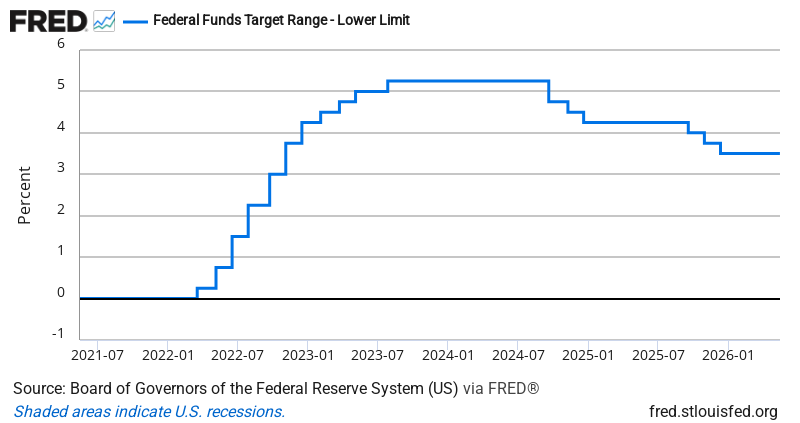
The Federal Reserve kept its target rate unchanged at 3.5% through mid-May, marking six straight sessions without adjustment as policymakers grapple with an oil shock that has fundamentally altered the inflation landscape. With crude prices stuck near $95 following the Strait of Hormuz closure, the Fed’s previous easing cycle has been put on indefinite hold.
This pause represents a dramatic pivot from just three months ago, when markets were pricing in potential rate cuts as core inflation appeared to be settling around 2.5%. The energy crisis changed everything. Every sustained $10 oil premium typically adds about 0.6% to the Consumer Price Index, and with crude up nearly 45% since February, monthly inflation readings could soon print with a “1-handle” — something we haven’t seen since the initial post-COVID surge.
The Fed’s challenge is uniquely complex this cycle. Unlike typical oil shocks that threaten recession, the U.S. benefits from being a net energy exporter. Higher crude prices boost domestic producers even as they squeeze consumers. This creates a scenario where asset price moderation from persistent inflation is more likely than an economic downturn — keeping the Fed in restrictive territory longer than anyone anticipated.
Many professional investors are positioning for this “higher-for-longer” environment by rotating toward energy producers and away from interest-sensitive sectors. Historically, when the Fed pauses due to supply-side inflation shocks, investors have favored real assets and companies with strong pricing power over growth stocks that rely on low borrowing costs.
Bottom Line: The Fed’s steady hand reflects a new reality where energy geopolitics, not domestic demand, drives monetary policy. With the Strait crisis showing no signs of resolution, 3.5% may be the floor, not the ceiling.
Source: Federal Reserve Economic Data (FRED)
ON1010.com provides economic education for investors. Nothing here is investment advice. Always consult a qualified financial advisor before making investment decisions.
Free Research
The economy moves fast. We make sure you move faster.
Economic data, policy shifts, and market signals — delivered to your inbox.
Subscribe Free