
Fed Funds Rate Locked at 3.63% as Oil Shock Freezes Policy
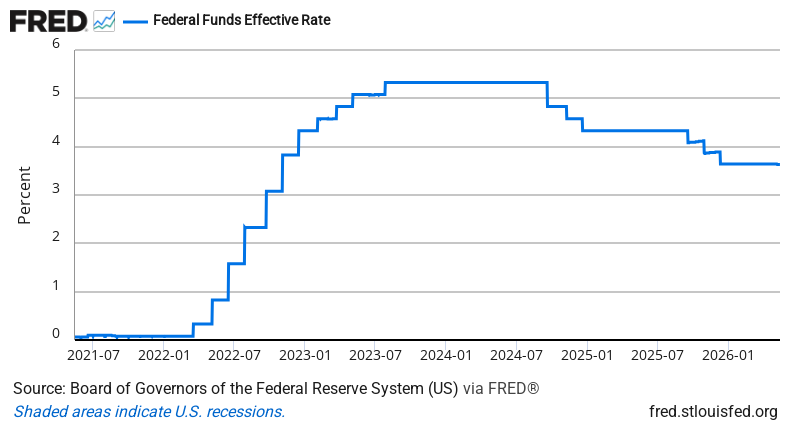
The effective federal funds rate held steady at 3.63% through mid-May, marking six straight days at the exact same level. That’s not unusual by itself, but it reflects a Fed that has completely abandoned its easing cycle after the Strait of Hormuz closure sent oil from $66 to $95 and put inflation back on the table.
This rate stability tells a bigger story about where we are economically. Before the energy crisis hit in late February, markets were pricing in multiple rate cuts through 2026. Now the Fed is stuck — they can’t ease with oil prices 44% higher than pre-crisis levels, but they also can’t tighten meaningfully while monitoring how the shock ripples through different parts of the economy. The 3.63% rate represents a holding pattern while policymakers wait to see if energy inflation becomes broader inflation.
What makes this particularly interesting is how differently this crisis affects various economies. The US, as a net energy exporter, faces inflation pressure but not the recession risk hitting energy-dependent regions like Japan and South Korea. That gives the Fed more room to stay patient compared to central banks dealing with both inflation and growth collapse simultaneously.
Many professional investors view this type of policy pause as a reason to focus on sectors that benefit from higher-for-longer rates — like financials — while remaining selective about energy-intensive industries facing margin pressure. Historically, when the Fed holds rates steady during supply shocks, markets often reward companies with pricing power over those with high operational leverage.
Bottom Line: A 3.63% funds rate isn’t just a number — it’s the Fed acknowledging that the old playbook doesn’t work when oil shocks create winners and losers instead of universal economic pain.
Source: Federal Reserve Economic Data (FRED)
ON1010.com provides economic education for investors. Nothing here is investment advice. Always consult a qualified financial advisor before making investment decisions.
Free Research
The economy moves fast. We make sure you move faster.
Economic data, policy shifts, and market signals — delivered to your inbox.
Subscribe Free