
Mortgage Rates Jump Above 6.5% as Housing Market Faces New Pressure
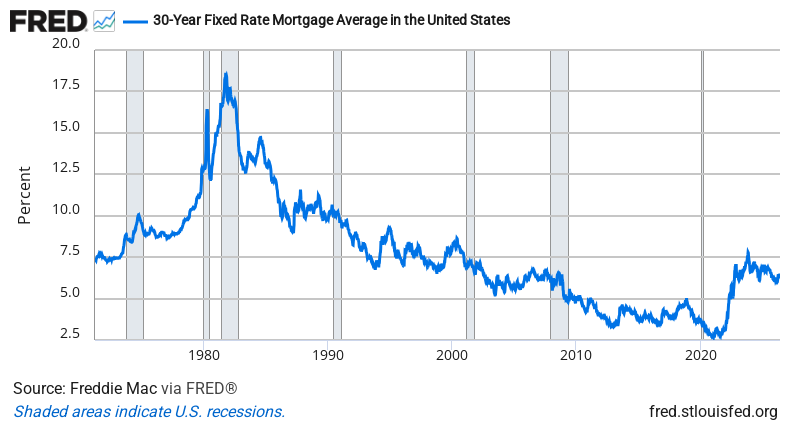
The 30-year mortgage rate spiked to 6.51% this week, up from 6.36% just seven days earlier — a sharp 15 basis point jump that pushes borrowing costs to their highest level in over a month. That’s a 2.4% increase in the cost of money in a single week, the kind of move that makes potential homebuyers pause mid-search.
This isn’t just about housing — it’s a real-time stress test of how much economic momentum can survive higher borrowing costs. Mortgage rates typically track the 10-year Treasury, which means bond investors are demanding higher yields either because they expect stronger growth (and inflation) ahead, or because they’re getting nervous about something. Either way, the housing market becomes the canary in the coal mine. When rates jump this fast, it immediately prices out buyers on the margin and forces sellers to adjust expectations.
The timing matters too. We’re heading into the traditional spring buying season with rates that have now climbed steadily from 6.23% in late April. Every 50 basis points of rate increases typically reduces home affordability by about 6% — meaning fewer qualified buyers and more pressure on home prices to moderate.
Many professional investors watch mortgage rates as an early indicator of consumer spending shifts. Higher rates don’t just affect home sales — they reduce the wealth effect from rising home prices and limit cash-out refinancing, both of which have supported consumer spending in recent years. Historically, sustained moves above 6.5% have led investors to rotate toward defensive sectors and reconsider growth-sensitive positions.
Bottom Line: When mortgage rates jump this aggressively, something’s shifting in the broader interest rate environment — and the housing market will tell us first whether the economy can handle it.
Source: Federal Reserve Economic Data (FRED)
ON1010.com provides economic education for investors. Nothing here is investment advice. Always consult a qualified financial advisor before making investment decisions.
Free Research
The economy moves fast. We make sure you move faster.
Economic data, policy shifts, and market signals — delivered to your inbox.
Subscribe Free