
Consumer Sentiment Takes Its Steepest Dive in Months
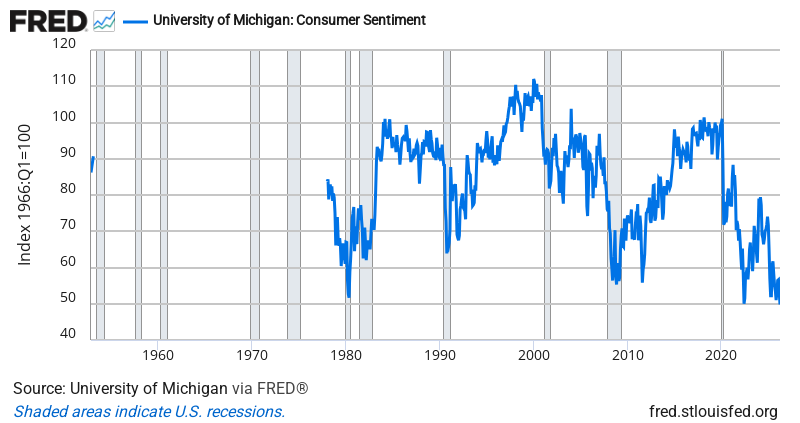
Consumer sentiment just fell off a cliff. The University of Michigan’s index dropped to 49.8 in April, down from 53.3 in March — a 6.6% monthly decline that wipes out nearly all the gains from earlier this year. More telling: sentiment is now down 18% from a year ago, sitting well below the neutral 100 level.
This isn’t just a bad month — it’s the fourth straight decline and puts sentiment back near recession-like levels. What makes this particularly interesting is the timing. We’re not in a recession (yet), unemployment remains relatively low, and corporate earnings haven’t collapsed. But consumers are feeling increasingly pessimistic about where things are headed. Historically, when sentiment drops this sharply while the economy still looks decent on paper, it often signals trouble brewing beneath the surface.
Consumer sentiment matters because it drives 70% of the economy through spending decisions. When people feel pessimistic about their financial future, they pull back on discretionary purchases — everything from dining out to buying cars. This creates a feedback loop: less spending leads to weaker business results, which validates the pessimism and drives sentiment even lower.
Many professional investors watch this data closely because sentiment often leads economic reality by several months. In this type of environment, historically they’ve rotated toward defensive sectors like utilities and consumer staples — companies that sell things people need regardless of how they feel about the economy. Some also consider this a potential opportunity to gradually build positions in quality companies at discounted prices, though timing remains crucial.
Bottom Line: When consumers are this gloomy while the economy still looks relatively stable, it’s worth asking what they’re seeing that the official data isn’t capturing yet.
Source: Federal Reserve Economic Data (FRED)
ON1010.com provides economic education for investors. Nothing here is investment advice. Always consult a qualified financial advisor before making investment decisions.
Free Research
The economy moves fast. We make sure you move faster.
Economic data, policy shifts, and market signals — delivered to your inbox.
Subscribe Free