
Jobs Data Shows Cracks Starting to Form
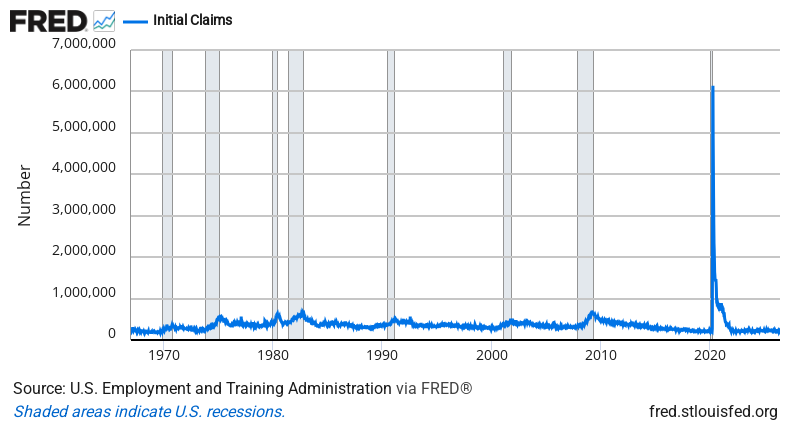
Initial jobless claims jumped to 215,000 last week — up 5,000 from the prior week and hitting the highest level in three weeks. What’s more telling: this marks the fourth increase in the past six weeks, suggesting the steady drumbeat of layoffs might be picking up tempo.
The recent pattern tells a story. Claims had been hovering comfortably in the low-200k range through early April, but we’re now seeing more volatility and a general drift higher. 215,000 isn’t alarming by historical standards — we’re still well below recession levels — but the trend matters more than any single week. When claims start climbing consistently, it usually means companies are getting more cautious about their workforce before it shows up in the monthly jobs report.
This fits with other signals we’ve been tracking. Corporate profit margins have been under pressure from persistent wage inflation, and many companies have been telegraphing plans to slow hiring rather than accelerate it. The labor market is shifting from “desperate for workers” to “selective about workers” — a transition that often happens gradually, then suddenly. Think of rising claims as an early-warning system: businesses trim the edges before they cut deep.
Many professional investors watch jobless claims closely because they lead other employment data by weeks. In environments where claims are rising but still contained, defensive sectors like utilities and consumer staples often outperform, while growth stocks can get volatile. Historically, this type of gradual labor market cooling has been a signal for investors to consider quality over momentum and to keep more powder dry for opportunities ahead.
Bottom Line: The job market isn’t breaking, but it’s definitely bending. When companies start letting more people go — even modestly — it’s worth asking what they’re seeing that we’re not yet.
Source: Federal Reserve Economic Data (FRED)
ON1010.com provides economic education for investors. Nothing here is investment advice. Always consult a qualified financial advisor before making investment decisions.
Free Research
The economy moves fast. We make sure you move faster.
Economic data, policy shifts, and market signals — delivered to your inbox.
Subscribe Free