
Mortgage Rates Hit 6.53% as Housing Market Faces New Pressure Point
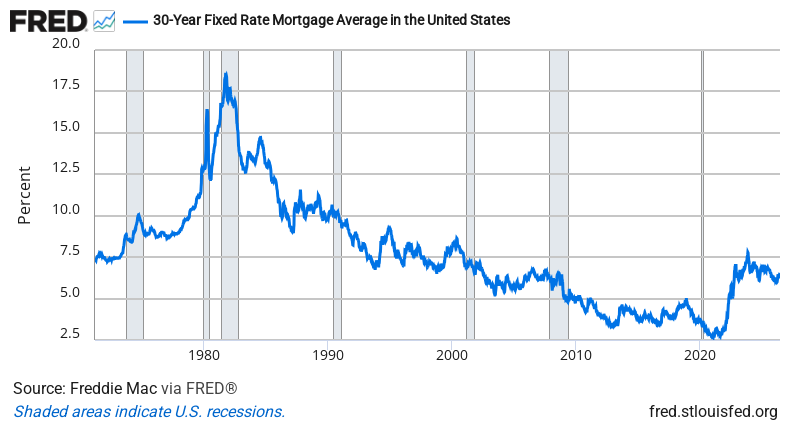
Mortgage rates climbed to 6.53% this week, up from 6.51% a week earlier — marking the fourth consecutive weekly increase and pushing rates to their highest level since late April. What started as a modest uptick three weeks ago is now looking like a genuine shift higher, with rates up 30 basis points from their recent low of 6.23%.
This isn’t just about housing affordability getting squeezed again. Rising mortgage rates signal that bond markets are repricing risk — either because inflation expectations are creeping up or because investors are demanding higher compensation for lending long-term. Given that mortgage rates typically track the 10-year Treasury with a spread, this move suggests something fundamental is shifting in the credit markets. The timing matters too: we’re heading into the traditionally busy summer buying season, when higher rates hit hardest.
Here’s the productivity angle most people miss: housing is where Americans park their biggest chunk of wealth, and it’s also where they take on their biggest debt load. When mortgage rates rise meaningfully, it doesn’t just cool home sales — it changes how households think about spending, saving, and taking financial risk. Higher rates mean existing homeowners feel less wealthy (their biggest asset is worth less) while potential buyers get priced out entirely.
Many professional investors view rising mortgage rates as a leading indicator for broader consumer spending patterns. Historically, sustained moves higher in housing costs have preceded shifts in retail sales, auto purchases, and discretionary spending. Real estate investment trusts (REITs) and homebuilder stocks often move first, but the effects ripple through the entire consumer economy over 6-12 months.
Bottom Line: Four weeks of rising rates might be noise, but the direction matters more than the magnitude — housing stress has a way of spreading to the rest of the economy.
Source: Federal Reserve Economic Data (FRED)
ON1010.com provides economic education for investors. Nothing here is investment advice. Always consult a qualified financial advisor before making investment decisions.
Free Research
The economy moves fast. We make sure you move faster.
Economic data, policy shifts, and market signals — delivered to your inbox.
Subscribe Free