
Inflation Expectations Hold Steady Despite Energy Crisis
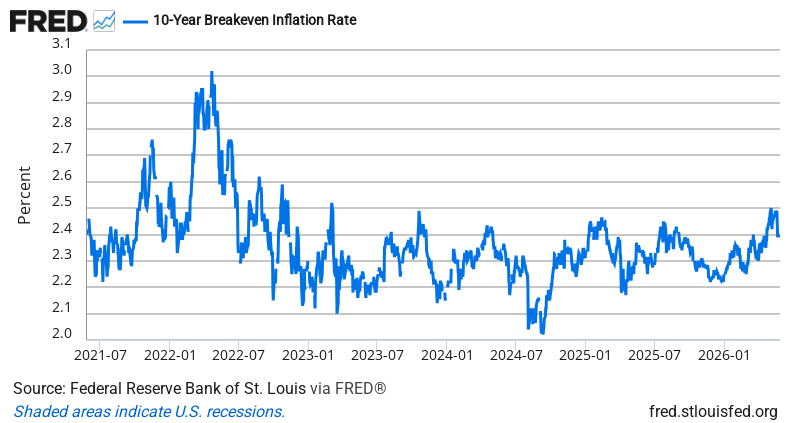
The bond market’s 10-year inflation expectations are sitting at 2.39%, essentially unchanged over the past week even as oil trades near $95 and the Strait of Hormuz remains closed. That’s either remarkable confidence in the Federal Reserve’s ability to anchor long-term price pressures, or a signal that investors see the current energy shock as temporary.
Here’s the puzzle: every sustained 10% oil premium typically adds about 0.6% to headline inflation, yet breakeven rates haven’t budged from their recent range. Pre-crisis, both CPI and PCE were settling into a comfortable 2.5% annual pace. Now, with oil up 44% from pre-war levels, monthly CPI prints could easily hit the 1-handle. But the bond market is betting that whatever spike we see in the next few quarters will fade once the Hormuz situation resolves. The 2.39% reading suggests investors still see the Fed’s 2% target as credible over the long haul.
This creates an interesting dynamic for portfolio positioning. Many professional investors use breakeven inflation rates as a key signal for real asset allocation. When breakevens are stable despite obvious inflationary pressures, it often indicates that TIPS may be undervalued relative to nominal Treasuries. Historically, this type of environment has led investors to look at energy-adjacent sectors and companies with pricing power, while being cautious about long-duration assets that could get squeezed if the market’s inflation optimism proves premature.
Bottom Line: The bond market is making a big bet that today’s energy crisis won’t reshape the inflation landscape permanently. If the Strait reopens quickly, that confidence looks smart. If it doesn’t, 2.39% might look awfully optimistic by year-end.
Source: Federal Reserve Economic Data (FRED)
ON1010.com provides economic education for investors. Nothing here is investment advice. Always consult a qualified financial advisor before making investment decisions.
Free Research
The economy moves fast. We make sure you move faster.
Economic data, policy shifts, and market signals — delivered to your inbox.
Subscribe Free