
Markets Test New Productivity Narrative as Rate Path Stays Muddy
The Opening Bell
Markets are wrestling with a fundamental question this Friday: is the corporate productivity boom strong enough to carry stocks higher even with rates stuck above 4%? Yesterday’s profit surge to record highs suggests yes, but jobless claims creeping higher hints at cracks forming beneath the surface. The bond market’s mixed signals reflect this uncertainty.
Market Snapshot
Fed Funds Target Range: 3.5%-3.75%
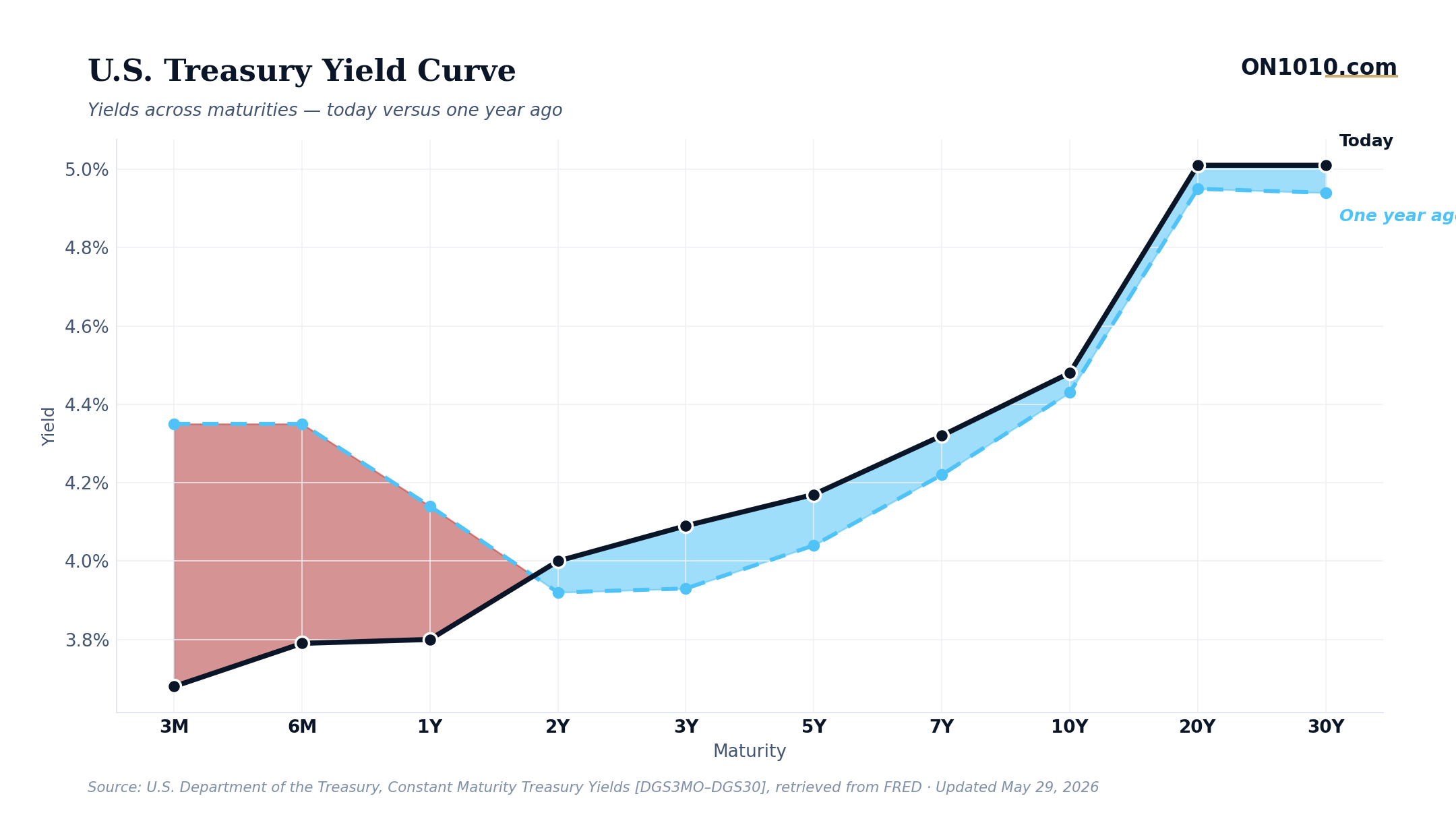
10-Year Treasury: 4.48%
2-Year Treasury: 4.0%
10Y-2Y Spread: 0.46% (normal)
Breakeven Inflation (10Y): 2.39%
The yield curve continues its gradual steepening trend, with the 10Y-2Y spread widening from deeply inverted territory just months ago. What’s notable: inflation expectations holding steady despite ongoing energy volatility, suggesting bond investors still believe the Fed can thread the needle.
What Moved Yesterday
Corporate America delivered a masterclass in efficiency that’s reshaping how investors think about this cycle. After-tax profits jumped 3.3% to nearly $3.92 trillion in the latest quarter, driven by a productivity boom that’s letting companies expand margins even as wage growth accelerates. This isn’t just good news for shareholders. It’s the kind of structural shift that can support higher stock valuations while keeping inflation in check.
But there’s a tension building in the labor market. Jobless claims rose to 215,000, the highest in three weeks, while yesterday’s jobs data showed hiring momentum slowing. The productivity gains are real, but they’re also allowing companies to do more with fewer workers. That’s great for margins and stock prices in the near term, but it raises questions about whether this growth model is sustainable if consumer spending starts to wobble.
The bond market’s reaction tells the story: yields pulled back modestly as traders weighed stronger corporate fundamentals against emerging labor market softness. The 10-year dropping 19 basis points from last week’s peak suggests some reassessment of how aggressive the Fed needs to be.
Today’s Playbook
With no major data releases scheduled, focus shifts to sector rotation patterns and how markets digest this productivity versus employment tension. Technology stocks have been the clear beneficiary of the efficiency narrative, up 12.3% versus the S&P 500 over the past month. That outperformance makes sense when profit margins are expanding, but watch for any signs this trade is getting crowded.
Housing data will be worth monitoring through the lens of mortgage rates, which hit 6.53% this week. The productivity boom hasn’t helped rate-sensitive sectors, and housing remains a key test of whether higher-for-longer rates are starting to bite. If existing home sales or housing starts show unexpected weakness, it could signal broader cracks in the consumer story.
Geopolitically, oil’s stabilization near $88 removes one immediate headwind, but the Strait of Hormuz situation keeps energy markets on edge. Any escalation could quickly shift market focus back to inflation risks and complicate the productivity narrative.
The Bigger Picture
We’re witnessing something that looks increasingly like the mid-1990s: a technology-driven productivity acceleration that’s allowing the economy to grow faster without triggering inflation. The difference is interest rates. In the ’90s, the Fed was cutting rates as productivity gains became clear. Today, rates are still elevated due to recent inflation scares and geopolitical energy risks.
This creates an interesting setup. If productivity gains prove durable, they could justify current stock valuations even with bonds yielding above 4%. But if the efficiency improvements come mainly from labor shedding rather than genuine innovation, the growth becomes less sustainable. The next few months of employment data will tell us which scenario we’re in.
Bottom Line: The productivity boom is real, but its durability depends on whether companies are getting more efficient or just getting smaller. Watch the labor market for the answer.
ON1010.com provides economic education for investors. Nothing here is investment advice. Always consult a qualified financial advisor before making investment decisions.
Free Research
The economy moves fast. We make sure you move faster.
Economic data, policy shifts, and market signals — delivered to your inbox.
Subscribe Free