
Fed Holds Steady as Rate Cut Cycle Appears to Stall
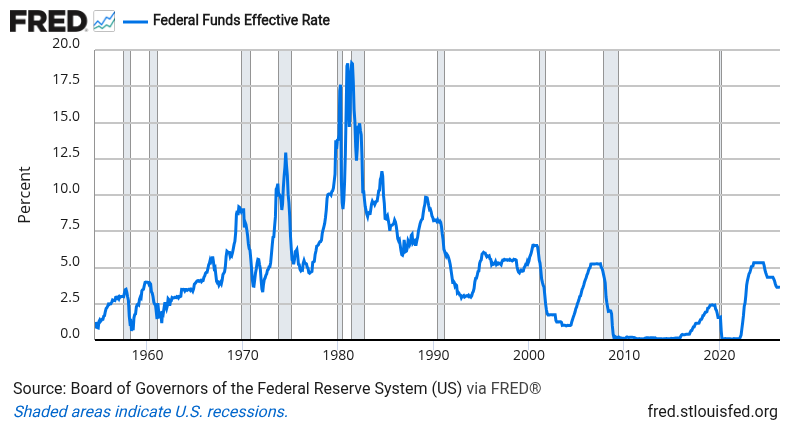
The federal funds rate barely budged in May, slipping just 0.01 percentage points to 3.63% — essentially unchanged for the fourth straight month. After cutting rates aggressively through late 2025, the Fed appears to have found a parking spot and isn’t in any rush to move.
This pause tells a story about where the economy stands. The 70 basis point drop over the past year suggests the Fed successfully engineered a “soft landing” — cooling inflation without crushing growth. But the recent plateau indicates policymakers think they’ve hit the sweet spot. They’re not cutting because the economy is strong enough to handle current rates, but they’re not raising because inflation isn’t forcing their hand.
Historically, when the Fed pauses after a cutting cycle, it signals confidence that monetary policy is appropriately calibrated. The current 3.63% rate sits in what many economists consider a neutral range — not stimulating growth but not restricting it either. This contrasts sharply with the emergency-level rates we saw during COVID or the restrictive levels that peaked above 5% in 2023.
In this type of environment, many professional investors focus on sectors that benefit from stable, moderate rates rather than betting on directional moves. Historically, financials have found their footing when rate volatility subsides, while growth stocks often perform well when borrowing costs aren’t moving higher. Bond investors typically look for opportunities in the belly of the yield curve when the Fed signals it’s done cutting.
Bottom Line: The Fed has shifted from firefighter to monitor. With rates stable near neutral levels, the focus turns to whether economic data will force them back into action — or if this pause becomes the new normal.
Source: Federal Reserve Economic Data (FRED)
ON1010.com provides economic education for investors. Nothing here is investment advice. Always consult a qualified financial advisor before making investment decisions.
Free Research
The economy moves fast. We make sure you move faster.
Economic data, policy shifts, and market signals — delivered to your inbox.
Subscribe Free