
Fed Funds Target Rate (Lower Bound): Latest Release
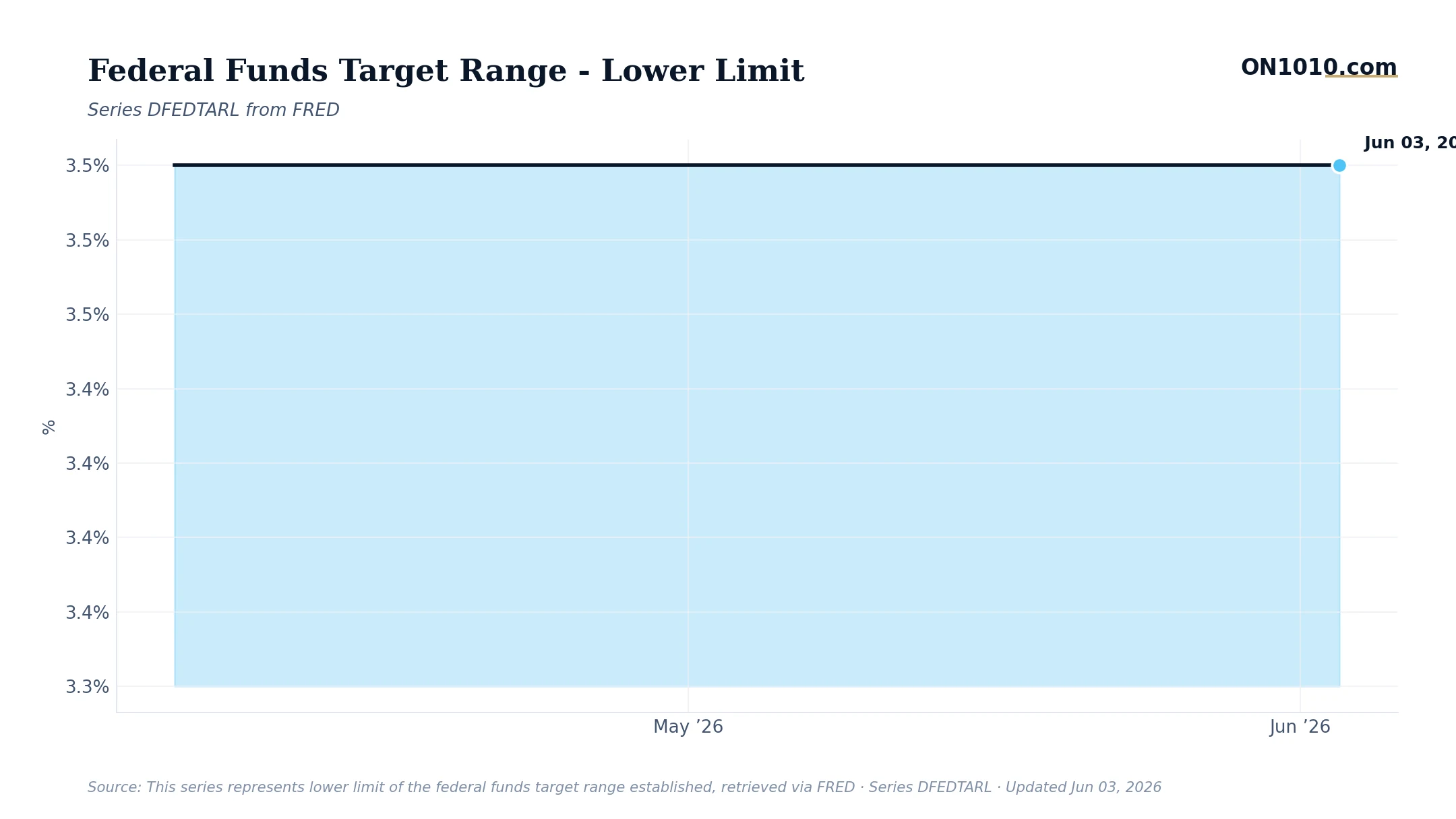
Fed Holds Steady at 3.5% as Oil Crisis Forces Policy Pause
The Federal Reserve kept its benchmark rate unchanged at 3.5% for the sixth consecutive day, marking a clear shift from the easing cycle that seemed likely just months ago. What changed? The Strait of Hormuz closure and resulting oil spike from $66 to $95 have put the Fed in wait-and-see mode on inflation.
This pause reflects a fundamental recalibration of monetary policy in the face of geopolitical disruption. Before the energy crisis, the Fed was eyeing potential rate cuts as inflation settled toward 2.5%. Now, with every sustained $10 oil premium adding roughly 0.6% to CPI, policymakers are bracing for inflation to resurge. The shift from easing bias to neutral stance happened faster than most expected, a reminder that external shocks can upend the best-laid monetary plans.
The broader context matters here. Unlike previous oil shocks that threatened recession, this one hits a US economy that’s actually a net energy exporter. Higher oil prices benefit domestic producers even as they squeeze consumers. That creates an unusual dynamic where the Fed worries more about asset price bubbles from persistent inflation than economic collapse. It’s inflation without the traditional recessionary offset.
Historically, when the Fed pauses cutting during an energy crisis, it signals they’re prioritizing price stability over growth support. In past cycles, markets have used these pauses to reassess which sectors benefit from higher energy prices and which face margin compression. The key question for businesses: are you positioned for an economy where energy costs stay elevated but growth continues?
Bottom Line: The Fed’s pause reflects a new reality where geopolitical shocks matter more than domestic data. The central bank is essentially saying: we’ll wait to see if this oil spike sticks before deciding our next move.
Source: Federal Reserve Economic Data (FRED)
ON1010 Research is an independent publisher of economic education and is not a registered investment adviser, broker-dealer, or investment company. This content is for educational and informational purposes only and is not investment advice or a recommendation to buy, sell, or hold any security. Published under the publisher exemption recognized by Section 202(a)(11)(D) of the Investment Advisers Act of 1940 (Lowe v. SEC). Always consult a qualified financial professional before making any financial decision.
Free Research
The economy moves fast. We make sure you move faster.
Economic data, policy shifts, and market signals — delivered to your inbox.
Subscribe Free