
Two-Year Treasury Yields Hit Pause at 4.05% — But the Calm May Be Deceiving
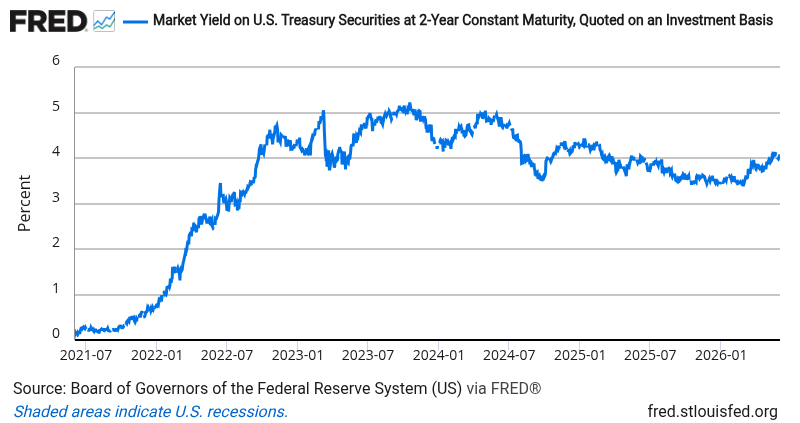
The 2-year Treasury yield held steady at 4.05% Tuesday, unchanged from Monday but up from 3.98% just last week. That seven basis point jump might look small, but in the bond world, it’s shouting something important about what investors expect from the Federal Reserve.
Here’s why this matters: The 2-year yield is essentially the market’s best guess at where Fed rates will be over the next 24 months. When it moves up this quickly, it means bond investors are pricing in either higher rates for longer, or additional rate hikes they weren’t expecting before. Given that inflation has been stickier than the Fed hoped, and recent jobs data showed continued wage pressures, the market is clearly having second thoughts about aggressive rate cuts this year. We’re seeing the classic tension between what the Fed wants to do (cut rates) and what the economy might force them to do (stay higher for longer).
This shift puts investors in a familiar but uncomfortable spot. When short-term rates stay elevated, cash and short-term bonds suddenly become competitive with riskier assets. Many professional investors start asking whether they’re getting paid enough to take equity risk when they can earn over 4% in essentially risk-free 2-year paper. Historically, sustained periods above 4% on the 2-year have coincided with increased volatility in growth stocks, particularly those that depend on cheap capital to fund expansion.
Bottom Line: The bond market is telling us the “easy money” era isn’t coming back as quickly as investors hoped. That 4% threshold on 2-year yields has often marked a dividing line between speculative excess and more disciplined capital allocation.
Source: Federal Reserve Economic Data (FRED)
ON1010.com provides economic education for investors. Nothing here is investment advice. Always consult a qualified financial advisor before making investment decisions.
Free Research
The economy moves fast. We make sure you move faster.
Economic data, policy shifts, and market signals — delivered to your inbox.
Subscribe Free